4 TV Advertising Lessons for 2027: How Marketers Connect Brand Building and Performance
A version of this article was originally published in Ad Age.
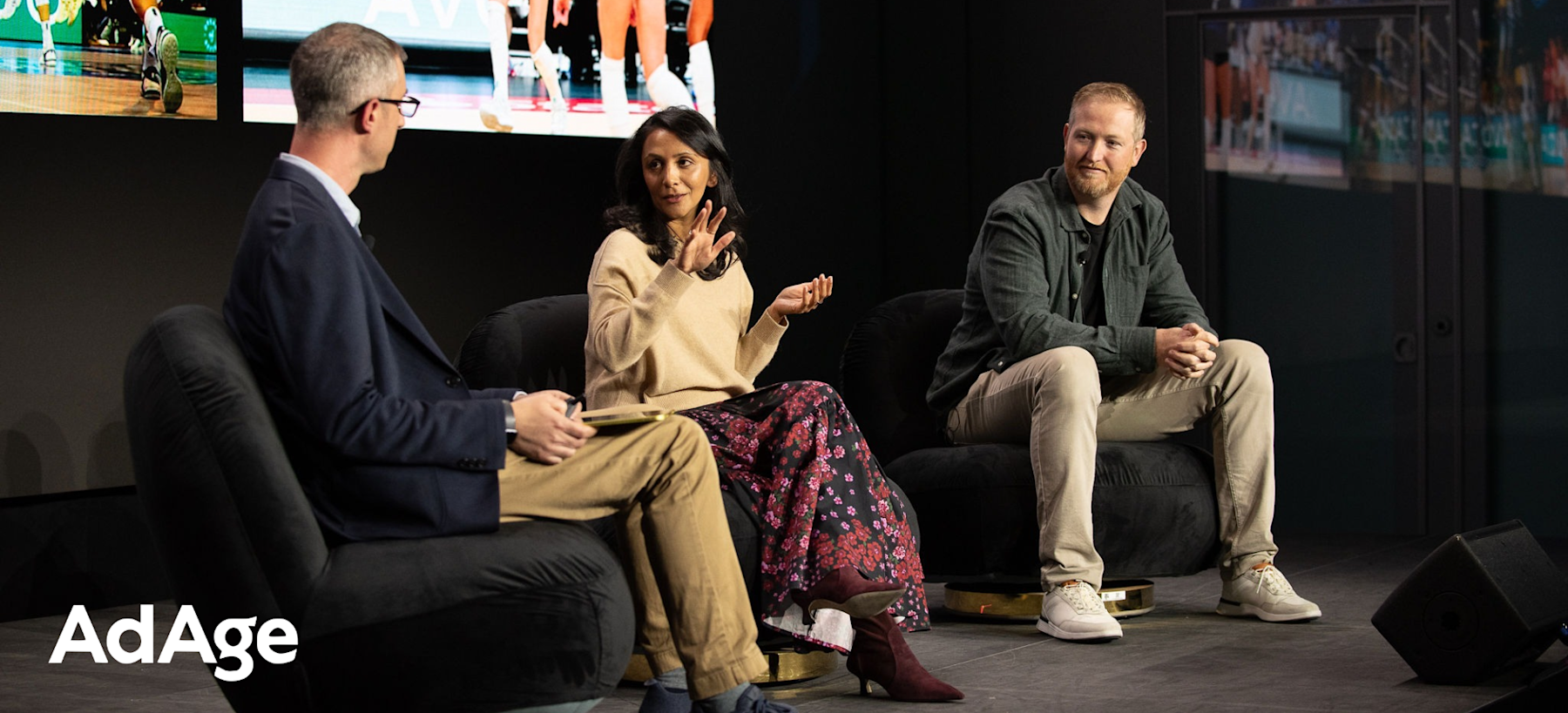
For years, TV asked marketers to pick a side: buy broad and efficient, or pay up for the big moment and trust the payoff would show up later. With every marketing dollar now under scrutiny, that trade-off is getting harder to defend. At Forward™ 2026, Tatari's annual forum discussing the future of advertising, marketers from Liquid I.V., Thorne, MANSCAPED and Avocado Green Mattress described how they stopped choosing. They pay for the moments that matter, tailor the creative to fit, and measure results from the first minute to the last sale. Liquid I.V. and Thorne shared how premium, well-chosen moments can outperform broad, low-cost inventory, while MANSCAPED and Avocado showed how a single TV investment can do several jobs at once.
With 2027 plans taking shape, their approaches are worth a close look. The next era of TV advertising isn’t about choosing between brand building and performance marketing. It’s about bringing them together through better planning, creative, and measurement.
Here are four takeaways worth bringing to the table as you plan for the year ahead, whether TV is new to your mix or already a foundational part of your strategy.
Premium on Purpose: Why Liquid I.V. and Thorne Bet on Big TV Moments
Both Liquid I.V. and Thorne entered TV the way many performance-minded brands do, chasing the lowest CPMs and the widest reach. Both then reversed course and moved their budgets into premium placements. "We thought low CPM and remnant was the way to go, but then we had to be honest: why are we on TV in the first place?" shared Rajiv Ragu, VP of growth at Thorne. The answer was awareness, and Ragu said premium placements also work as "a big trust cue" for Thorne's core customer. The brand calls that customer the "proactive optimizer": someone who takes charge of their own health and expects the best.
Liquid I.V. made the same pivot, moving from a heavy emphasis on direct response to premium spots, and its media team had a theory about where it would pay off. Izzy Rusher, director of media, inherited a plan built around basketball and football, but she had a hypothesis about who actually leans in. Basketball and football draw huge audiences, but many of them watch passively. Golf, she figured, doesn’t hold anyone who isn’t invested. “Someone that is watching golf is likely playing golf,” she said. The hunch paid off. Since 2025, golf has driven (pun, intended) more than 70% of the brand's top site-visit spikes. Expanding across marquee sports, including tennis, hockey, the NBA Finals and the men's World Cup, brought a drop in cost per site visit (CPV), and a huge lift in purchase conversion rate (CVR).
Neither brand got there overnight. Thorne tested broadly for two quarters, read the response rates, then built a saturation plan around the NBA, where it already had athletes featured prominently in its creative.
Takeaway: Prioritize attention over inexpensive impressions. Test broadly, and invest where your customers are most engaged.
Leverage Contextual Creative and Unique Sponsorships to Own the Moment
Context matters as much as inventory. With a small creative library, Rusher got scrappy. After seeing a golf brand wrap an evergreen spot in a branded frame during the US Open, she built one for Liquid I.V.: a lemon-lime packet next to a golf ball, laid over the existing "Trust the Science" ad. "It took all of maybe five minutes and cost literally nothing," she said. The test lifted response rate 70% and cut cost per site visit 20%. The team then scaled it to football, hockey, baseball and even skiing.
Thorne plans for context from the start. The same consumer research that guides its media also guides its talent and messaging, which is how a Ben Shelton spot ran while the tennis pro himself was competing in the US Open semifinals. Ragu is quick to credit some luck on the timing, but not on the strategy behind it. Both brands also pushed past the 30-second spot, opting to test broader TV sponsorships. Liquid I.V’s sponsorship included on-court signage. The payoff went beyond the broadcast, as clips the property posted to Instagram Reels put the brand in front of audiences who never saw the linear placement. At Thorne, the UFC partnership comes with behind-the-scenes content that feeds TV, social and other channels.
Measurement keeps those bets honest. Rusher tracks incremental site visitors 24 to 48 hours after a spot airs, then ROAS and effectiveness over the long term, and a substantial year-over-year increase in effectiveness. Ragu built a brand scorecard of branded search lift and site-visit response, which meant resisting his performance-marketing instincts. "Awareness moves over time. And so we have to be patient," he said.
Takeaway: Fit the creative to the moment, even if it's as simple as a frame around an existing spot. Then measure both the immediate response and the longer-term brand impact.
Beyond Game Day: How MANSCAPED Made a Single Moment Last All Year Long
MANSCAPED started with a direct-response test on linear, then followed its audience into streaming. Lucas Coyle, director of brand and omnichannel marketing, described a tiered approach today: brand awareness on premium linear, consideration on streaming with creator-style content, and conversion through programmatic CTV.
The brand's Super Bowl debut did a job smaller buys couldn't. MANSCAPED is known for one part of the body but sells head-to-toe grooming, and that message was getting lost in one-off campaigns. "We needed the biggest stage to tell that to everybody," Coyle said. The spot drove about 40 million impressions and a visible site traffic lift, and the team stretched the buy across the year, with cutdowns, product-focused versions and stronger CTAs through the MLB World Series.
Then came a benefit that never shows up in a TV report. "Good thing everyone's heard of the Super Bowl," Coyle said. Retailers got excited, and sell-through started "before we ever even aired the spot."
Takeaway: Treat a big moment as the start of a campaign, not a one-off. Extend their impact across channels, creative and retail.
Reach and Response on the Same Screen
Avocado Green Mattress came to TV to build awareness among shoppers who prefer to try a mattress in person, and to make the case to retailers that the brand deserved floor space in their stores. A consumer study the brand ran showed most shoppers want to test a mattress in store, and many never find the brand through performance channels. Sidrah Althaus, VP of digital marketing, described a portfolio of moments: MLB opening night, the World Cup, the US Open and an AVCA volleyball showcase pairing two 30-second spots with 15 minutes of courtside LED placements. It led into Labor Day weekend and drove a traffic spike and in-weekend sales without a giant budget.
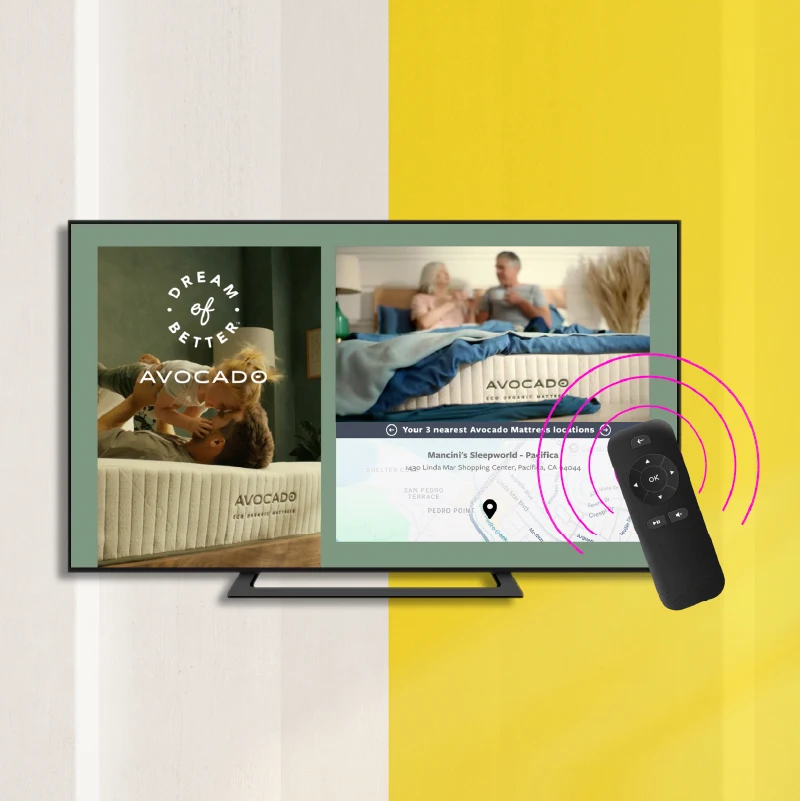
The brand also tested an interactive unit that let viewers engage with their remote, with no second screen and no QR code. With a highly priced product and a purchase journey that can stretch from a week to months, Althaus said the unit gave shoppers a way to learn about Avocado and find a nearby store. It beat benchmarks, produced a list of interested markets, and tested four spots, two companion banners and two backgrounds at once. A reach and frequency study showed the brand was “hitting a point of diminishing returns” by buying the same shows over and over, Althaus said. The fix was leaning into data to help them identify new networks, dayparts and platforms. Once they did, reach started climbing again.
Neither brand sees the funnel as an either/or anymore. "It's not upper funnel versus lower funnel for us anymore. It's not reach or frequency. It's both. They can both be friends," Althaus said. Coyle agreed: "We don't buy one versus the other. We're buying both," shifting the mix with seasonality, toward conversion in the holidays and awareness around launches and tentpoles.
Takeaway: Stop treating brand and performance as competing objectives. Set benchmarks early on for what you'll see in days, weeks and months out, and use the data to spot where more of the same has stopped working.
At a Glance: How Four Brands Use TV for Brand Building and Performance
Liquid I.V., Thorne, MANSCAPED and Avocado Green Mattress each paired high-impact TV moments with tailored creative and measurement that tracks both brand and performance outcomes.
Brand | Goal | What the team did | How they measure | Reported results |
Liquid I.V. | Move from heavy direct response to premium moments where viewers are invested | Shifted emphasis from basketball and football toward golf, then expanded to tennis, hockey, the NBA Finals and the men's World Cup; added a branded frame to an existing spot and tested a sponsorship with on-court signage | Incremental site visitors 24 to 48 hours after airing, then ROAS and long-term effectiveness | Golf drove more than 70% of top site-visit spikes since 2025; framed creative lifted response rate 70% and cut cost per site visit 20%; broader sports lowered CPV and raised purchase CVR |
Thorne | Build awareness and trust with its "proactive optimizer" customer | Moved from low-CPM and remnant inventory to premium placements; tested broadly for two quarters, then built a saturation plan around the NBA; added a UFC partnership | Brand scorecard of branded search lift and site-visit response | Premium placements work as a trust cue; awareness builds over time |
MANSCAPED | Tell a head-to-toe grooming story at scale and build retailer interest | Debuted in the Super Bowl and extended the buy through the MLB World Series; tiered plan of premium linear for awareness, streaming for consideration and programmatic CTV for conversion | Impressions, site traffic lift and retail sell-through | About 40 million impressions and a visible site traffic lift; retailer sell-through began before the spot aired |
Avocado Green Mattress | Build awareness among in-store shoppers and make the case for retail floor space | Bought a portfolio of moments (MLB opening night, the World Cup, the US Open and an AVCA volleyball showcase); tested an interactive remote unit; used a reach and frequency study to find new networks, dayparts and platforms | Benchmarks for days, weeks and months; reach and frequency study | Traffic spike and in-weekend sales over Labor Day weekend; interactive unit beat benchmarks and produced a list of interested markets; reach climbed again after the team added new networks |
A playbook in progress
The brands on stage at Forward™ weren’t claiming to have TV figured out. They were showing how they test, measure and adjust. For marketers weighing how much TV belongs in the mix in 2027, that’s the lesson: choose your moments, fit the message to them, and measure the whole funnel.
Ready to see what TV can do for your growth in 2027? Let’s talk!
Frequently Asked Questions (FAQs)
Can TV advertising support brand building and performance marketing at the same time?
Yes. Marketers from Liquid I.V., Thorne, MANSCAPED and Avocado Green Mattress described plans that serve both goals. MANSCAPED's Lucas Coyle said the brand buys for awareness and conversion together, shifting the mix with the season: toward conversion in the holidays and toward awareness around launches and tentpoles. Avocado's Sidrah Althaus described reach and response as goals the brand pursues together.
Why did Liquid I.V. and Thorne move from low-CPM inventory to premium TV placements?
Both brands began with the lowest CPMs and the widest reach, then moved budget into premium placements after revisiting their goals. Thorne's Rajiv Ragu said the brand returned to the reason it was on TV, which was awareness, and found that premium placements also act as a trust cue for its core customer. At Liquid I.V., Izzy Rusher's team concentrated on golf because golf viewers tend to be invested in the sport. Golf has driven more than 70% of the brand's top site-visit spikes since 2025, and expanding across marquee sports lowered cost per site visit and raised purchase conversion rate.
What is contextual TV creative, and how well did it work for Liquid I.V.?
Contextual creative adapts an ad to the programming it runs in. Rusher built a branded frame for an existing Liquid I.V. spot, with a lemon-lime packet next to a golf ball, in about five minutes at no cost. The test lifted response rate 70% and cut cost per site visit 20%, and the team then scaled the approach to football, hockey, baseball and skiing. Thorne applies the same idea through talent, running a Ben Shelton spot while Shelton competed in the US Open semifinals.
How do these brands measure TV results across the funnel?
Liquid I.V. tracks incremental site visitors 24 to 48 hours after a spot airs, then follows ROAS and effectiveness over the long term. Thorne built a brand scorecard of branded search lift and site-visit response, and Ragu said the team has to be patient because awareness moves over time. Avocado sets benchmarks for what the brand expects to see in days, weeks and months, and uses a reach and frequency study to see where buying more of the same stops working.
Is a Super Bowl ad only a brand awareness play?
MANSCAPED's debut served several jobs. The spot drove about 40 million impressions and a visible site traffic lift. The team extended the buy through the MLB World Series with cutdowns, product-focused versions and stronger CTAs. Retailers also responded, and sell-through began before the spot aired.
How can brands tell when TV reach has hit diminishing returns?
Avocado Green Mattress ran a reach and frequency study and found it had reached a point of diminishing returns by buying the same shows repeatedly. The team used data to identify new networks, dayparts and platforms, and reach started climbing again.
How did these brands use TV sponsorships beyond the 30-second spot?
Liquid I.V. tested a sponsorship that included on-court signage, and clips the property posted to Instagram Reels reached audiences who never saw the linear placement. Thorne's UFC partnership comes with behind-the-scenes content that feeds TV, social and other channels. Tatari has published more on streaming sponsorships and response rates.
What should marketers plan for when building a 2027 TV strategy?
The four brands point to three steps: choose the moments that matter, fit the creative to each moment, and measure the whole funnel from first-day response to long-term brand impact. Thorne tested broadly for two quarters before concentrating on the NBA, and Avocado set benchmarks early so the team could see when a tactic had stopped working.
What is Forward™?
Forward™ is Tatari's annual forum on the future of advertising. The brands in this article spoke at Forward™ 2026, and Tatari's recap of what marketers learned at Forward 2026 covers more of the event.

Hooman Javidan Nejad
I’m Senior Director of Marketing at Tatari and I’ve mastered the art of baking artisan sourdough bread.
Related

Forward™ 2026: What Marketers Learned About the Future of TV Advertising
Forward™ 2026 brought brands, creators, and media leaders together to explore where TV advertising is headed. Watch the highlights and see what you missed.
Read more

Watch: Inside MANSCAPED’s Black Friday TV Playbook
MANSCAPED's Brian Thibault shares the TV playbook behind the brand's biggest quarter, from a Super Bowl spot to a measurement stack that sees Amazon and retail.
Read more
Avocado Mattress Proves Interactive CTV Ads are Ripe for Growth
Avocado Mattress cracked the code on streaming by turning passive viewers into active shoppers through interactive CTV ads that helped drive retail foot traffic. Explore how these emerging ad formats are finally transforming the big screen into a powerful, actionable storefront.
Read more