
Watch: Bodhi’s Tihomir Liptak on Why TV Belongs in a Digital-First Media Mix
For a long stretch, growing an ecommerce brand was close to a formula. A good product, a decent Shopify site, and some Meta product ads could carry a business a long way. That stretch is over, and Tihomir Liptak thinks that's good news for brands willing to be more strategic.
Tihomir is the CEO of Bodhi, a 22-person growth marketing agency based in Fairfield, Iowa. Bodhi started out running Google ads in 2013, layered in Meta a few years later, and added TV to its clients' media mix in 2022. Today it takes brands from under $1 million in revenue into the eight-figure range.
He joined Jack and Gino on a recent episode of Breaking & Entering to talk about why a digital-first agency moved into TV, what happened in its first Tatari campaign, and which TV tactics have performed best for Bodhi's clients.
Outsmart, Not Outspend
Asked what brands want from their media dollars now that they didn't three years ago, Tihomir said the goal hasn't moved: grow, and spend efficiently. What's changed is the playbook. "I honestly feel that this is an opportunity for brands to win again," he said. "It was a little easy for a bit."
Bodhi's line for the new playbook is "outsmart, not outspend." With every client, that means working through the same questions. Is the media mix balanced? How do we get better data? Which assumptions should we test next? Is the creative pulling its weight? Which expansion channels, like TV, can reach new audiences?
None of that is about spending less. "The end outcome is you end up spending more on ads because the business is actually doing well," Tihomir said. And because no win carries over, the work never stops: "You go back to zero on January 1st, and growth isn't guaranteed."
Results-First, Not Digital-First
Bodhi grew up as a digital-first agency, but Tihomir doesn't think of it that way anymore. "Fundamentally, what I always want to be is a results-first agency," he said, using whatever tactics get a client there. Google and Meta are still core channels, and he's clear that every brand should keep running them as well as it can. By 2022, though, three pressures pushed him to look further.
Concentration risk. Anyone who lived through iOS 14.5 remembers what happens when too much of a business depends on one channel. Clients wanted to grow revenue and build a strong brand, but they also wanted to de-risk the media mix.
Diminishing returns. As spend climbs into the millions, platforms start to deliver less for each additional dollar, depending on a brand's addressable market and creative assets. Bodhi needed an expansion channel that could absorb real budget once it proved out.
Rising digital prices. Digital used to be the cheap option. It isn't anymore, and Tihomir doesn't expect that to reverse. Meanwhile, linear CPMs told a different story. "I can get on a pretty premium network, six placements, eight placements, ten placements for a very good TV commercial instead of a single Instagram story placement," he said. "That's an interesting premise. We should test that."
Lower CAC Than Meta in Three Months
At the time, a lot of marketers saw TV as expensive and hard, and digital as cheap and easy. Tihomir wanted a partner that would let Bodhi test that assumption with real data. He chose Tatari because it was "really a data-first, engineering-first platform."
Bodhi ran its first TV campaign with Tatari in 2022 for a premium home goods brand. Within three months, incrementality testing showed TV delivering a lower new-customer acquisition cost than Meta, with significantly more premium reach.
The benefits went beyond the numbers. People told the brand they'd seen it on TV, which gave it a credibility boost and even sparked investor interest. That campaign became Bodhi's proof point for pitching TV to other clients. Most of the time, Tihomir said, Bodhi is the one bringing TV to the table, not the brand.
There's also an opening for mid-market ecommerce brands specifically. Their competitors often aren't on TV yet, and their ads stand out from the car commercials that fill most breaks. "There's a lot of white space for them," he said.
Linear Is Where Bodhi's Clients Win Most
The hosts asked the obvious follow-up: if programmatic automates TV buying, why not run everything that way? Tihomir compared it to handing Google your website and letting Performance Max run every ad. Programmatic is one tactic, not a strategy.
His answer is to test each tactic on its own terms, the same way you'd test Performance Max, YouTube, Shopping, and AI Max inside Google before deciding what works. "If you're handing over full control, you are likely losing efficiencies or not getting strategic learnings that could help the brand grow."
The testing has produced a clear pattern. Across four years of TV for mid-market ecommerce clients, linear has generally been Bodhi's highest-performing tactic. That surprises people, because it's usually not where those brands start. But the cost per placement is affordable, and it puts brands on premium networks. Bodhi treats TV as "a convergent set of different opportunities" across linear, connected TV, and programmatic, and pushes clients to look at all three.
That Performance Max model is now available for premium TV, too. Tatari Max brings goal-based AI optimization to streaming: advertisers set the outcome they want, and Max places each impression where it's most likely to perform. It runs on direct-sold inventory from publishers like Disney, NBCUniversal, and Tubi at contracted rates, not auction prices, with no spend minimums. That makes it easier than ever to secure premium placements that make sense for your brand, with full visibility into where ads ran and what they drove.
That's just a highlight reel. Tihomir also shared more about Bodhi's growth playbook and why he's bullish on this moment for brands. Watch the full episode.
Frequently Asked Questions
Why should digital-first brands add TV to their media mix?
To grow beyond the ceiling of paid social and search. Concentrating spend in one or two platforms creates risk, as iOS 14.5 showed, and returns diminish as budgets scale. Digital media has also gotten more expensive. TV adds an expansion channel that builds new awareness and credibility while de-risking the overall mix.
Can TV acquire customers more efficiently than Meta?
It can. In Bodhi's first TV campaign with Tatari, for a premium home goods brand, incrementality testing showed a lower new-customer acquisition cost from TV than from Meta within three months, along with significantly more premium reach.
Should brands buy linear TV or programmatic TV?
Test both. Programmatic is one tactic, and handing over full control can cost efficiency and strategic learnings. For Bodhi's mid-market ecommerce clients, linear has generally been the highest-performing TV tactic over the last four years, thanks to affordable placements on premium networks.
What is Tatari Max?
Tatari Max is an AI-driven optimization engine for premium streaming TV, built on the same goal-based model as Performance Max. Advertisers set a goal and budget, and Max scores each available impression and places the ad where it's most likely to drive that outcome. It runs on direct-sold inventory from major publishers at contracted rates, with no spend minimums.

Michael Goldberg
I lead content at Tatari. When I’m not writing, I’m reading, watching The Office (again), hopelessly rooting for the Mets and Jets, and blasting heavy metal.
Related

Lessons for Brands to Win the 2026 Holiday Season, From the Advertisers Already Doing It
Holiday TV budgets are rising and campaigns are starting earlier. See what advertisers are doing for BFCM 2026, plus lessons you can pull for your own strategy.
Read more
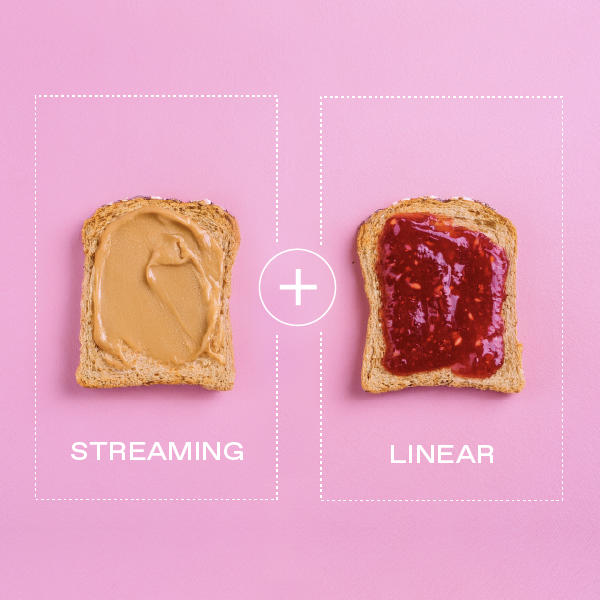
Why Streaming + Linear Work Better Together
When one advertiser shifted from a dual-channel TV strategy to streaming-only, performance quickly declined. See what happened when they turned linear back on.
Read more
The Performance Max Moment Is Coming to TV: How Tatari Max Changes the Way Advertisers Buy CTV
See how Tatari Max brings goal-based AI optimization to premium, direct-sold TV, the way Performance Max and Advantage+ did for digital.
Read more