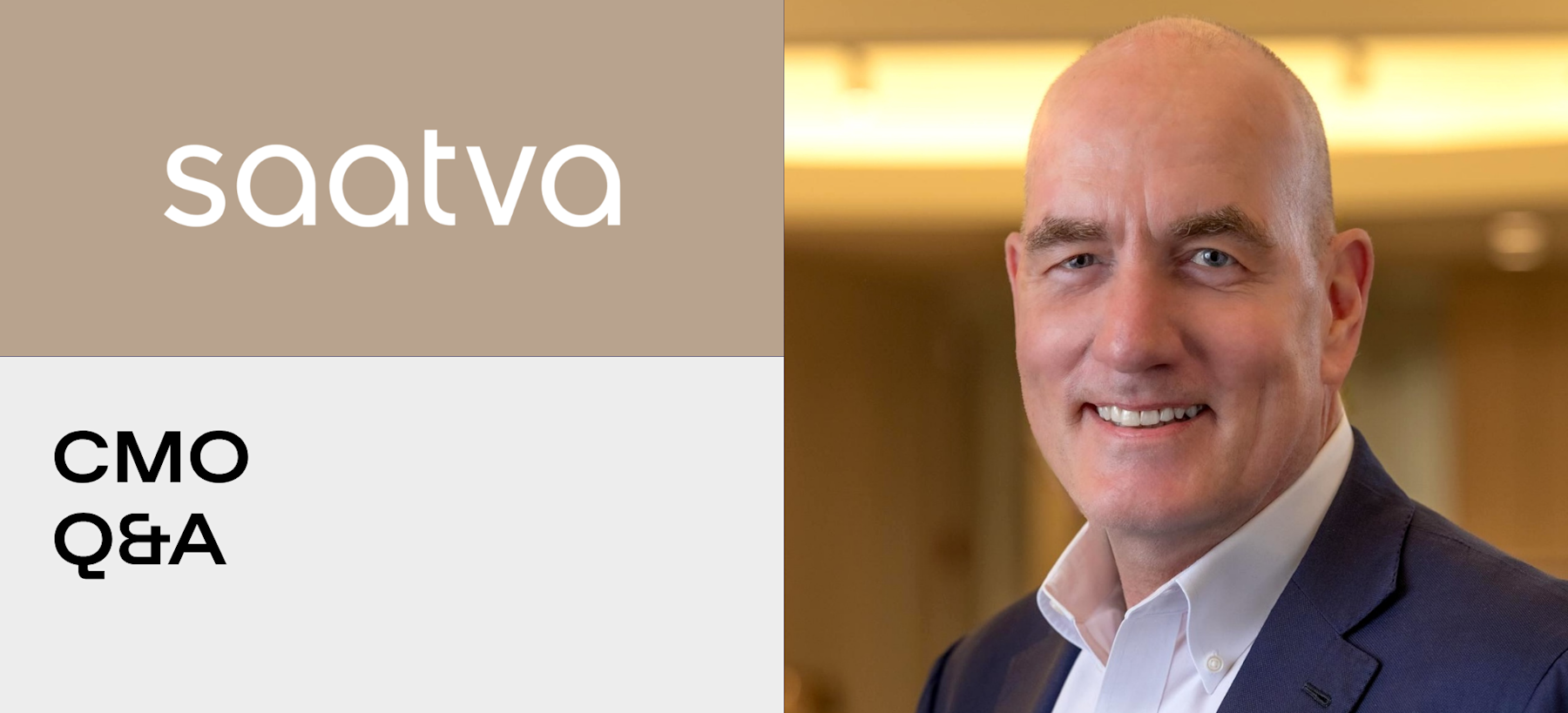
How to Build a World Class Marketing Team | Joe McCambley
Two CMOs into this series, a pattern has started to emerge. Ask world-class marketing leaders how they'd build a team from scratch, where most orgs go wrong structurally, and what objective drives their decisions, and the answers agree on more than you'd expect. Silos are bad. Brand and performance need to work together. Measurement matters. But the how varies considerably depending on who you ask.
For the latest installment, we went to Joe McCambley, Chief Marketing Officer of Saatva, the luxury sleep company that has built one of the most recognized brands in a notoriously competitive category. Joe brings 40 years of marketing experience to the role and a first-hand view of what actually holds up over time and what just sounds good on a LinkedIn post.
His answers to these three questions are worth reading closely, especially the first one, because it doesn't start where you'd expect.
Three Questions. No Script. Honest Opinions.
The thought experiment here is the same one we've put to every CMO in this series: imagine you're starting from zero. No org chart to inherit, no legacy hires, no political considerations. What do you build first, and why? For Joe, the answer doesn't begin with a marketing role at all.
If you were building a marketing team from scratch today, what roles would you hire first, and why?
"My first hire would be my CEO.
I know that's not the answer you're expecting, but after nearly 40 years in this business, I'm convinced that a CMO's success depends less on the team they build than on the leader who hired them. So if I'm starting from scratch, I'm going CEO shopping first.
I'd be looking for five qualities. Patience matters most, because meaningful brand building takes years, not quarters. The average CMO tenure is two years — which is exactly why so many marketing organizations never achieve anything lasting. If my CEO can't commit to the journey, no team structure in the world will matter.
A facility with numbers is equally critical, because you will have hundreds of conversations about data over the life of your work together, and a CEO who can't see how numbers relate to each other will never fully understand what you do or why it matters.
Logic matters because data doesn't always point the way clearly, and sometimes good decisions require leaps of logic.
Instinct matters because when data and logic aren't enough, someone has to have the courage to make the call anyway — and the more knowledge about your category and consumer that are baked into the DNA of your CEO, the better those "gut" calls will be.
Finally, loyalty matters because there will be moments when your results lag your efforts. When the board is impatient and the case for cutting the marketing budget looks reasonable on paper, you need a CEO who will stand in that room and defend the work, and your team.
I wake up every day thankful that I have that CEO.
The rest of the build is about creating the conditions for my media team to succeed. First, a strategist who can set the direction and hold it across time horizons. Then analytics, because without a defensible data foundation, you can't make smart channel decisions or earn credibility in any room that matters. Then creative, in-house, built around someone who understands the brand's voice deeply, who is focused exclusively on your brand, and who can produce assets worth putting into market. My media team — upper funnel and performance alike — can only be as good as the strategy, data, and creative they have behind them. Get those three right first, and you give your media team a real chance to win."
After 40 years, Joe has arrived at the conclusion that the most important hiring decision a CMO makes isn't on their own team. His five criteria for a CEO read less like a wish list and more like a checklist from someone who has seen what happens when even one of those qualities is missing. The rest of his build is deliberately ordered: strategy, then analytics, then creative. Everything else runs on top of those three.
Which makes his answer about structural mistakes a natural extension of the same thinking.
What mistake do you see marketers make most often when structuring their marketing team?
"They hire for channels before they hire for thinking.
A team built around channel specialists — a search person, a social person, a TV person — will each optimize their own lane and pull in different directions. What looks like a marketing organization is actually a collection of tactics in search of a strategy. And when results disappoint, which they will, no one has the framework to understand why or what to do differently.
The deeper mistake underneath that one is building the team around metrics that are easy to defend rather than ones that actually matter. Performance channels produce dashboards that look convincing and sometimes are convincing. But if the brand isn't growing awareness, consideration, share of search, and market share, those dashboards are measuring activity, not progress. Team structure follows measurement philosophy, so if you're measuring the wrong things, you'll hire the wrong people to chase them.
None of this is complicated, but it requires patience — which brings me back to the CEO. If the person at the top is demanding proof of ROI on every dollar every quarter, the CMO will build a team designed to produce that proof, whether or not it reflects what's actually building the business. Great team structure starts with a leader who understands that some of the most important work won't show up in next month's numbers."
Two mistakes, really, and they're connected. Channel specialists without strategic thinkers is a structural problem. But measuring the wrong things in the first place is the reason it keeps happening. The wrong metrics drive the wrong hires, and that cycle can take years to unwind. And as Joe keeps pointing out, it rarely starts with the CMO.
His answer to the final question is where philosophy becomes a practice.
What is the primary objective that shapes how you structure your marketing org?
"I want a team that can hold two time horizons simultaneously — the quarter and the decade.
Most teams are built for one or the other. Performance teams are built for the quarter. Brand teams are built for the decade. The tension between those two orientations is palpable, and if you don't structure around it deliberately, the urgent will always crowd out the important. Short-term pressure never goes away, which means long-term brand building will always lose the budget argument unless you've built a structure that protects it.
At Saatva, that means clear swim lanes. My upper funnel team builds mental availability — the slow, compounding work of making sure consumers know who we are and what we stand for before they're ready to buy. My performance team converts that availability into revenue. Analytics connects the two, measuring not just what happened last week but what the last three years of investment implies about where we'll be three years from now.
When brand and performance operate in silos, they will always compete for budget and work at cross purposes. Only fully integrated teams with shared purpose can win in the short term while building a brand for the ages. That integration doesn't happen by accident. It has to be designed into the structure from the beginning — which is why, once again, it all starts with the right CEO."
This is the third installment in our ongoing series asking world-class CMOs the same three questions about building modern marketing organizations.

Michael Goldberg
I lead content at Tatari. When I’m not writing, I’m reading, watching The Office (again), hopelessly rooting for the Mets and Jets, and blasting heavy metal.
Related
How to Build a World Class Marketing Team | Vineet Mehra
What does a high-performing marketing org actually look like in 2026—when AI, growth pressure, and brand all collide? Chime Chief Growth and Marketing Officer, Vineet Mehra, cuts through the noise with a sharp, experience-backed framework for building teams that scale efficiently and avoid the silos holding most marketers back.
Read more
How to Build a World Class Marketing Team | Victoria Vaynberg
Nanit CMO Victoria Vaynberg shares how to build a world-class marketing team, from hiring AI agent engineers to breaking down brand vs. performance silos.
Read more

Fubo’s Alberto Horihuela on the Power of TV Advertising
Tatari spoke with Fubo’s Co-founder and Chief Operating Officer, Alberto Horihuela, about building a TV streaming service and growing it with TV advertising.
Read more