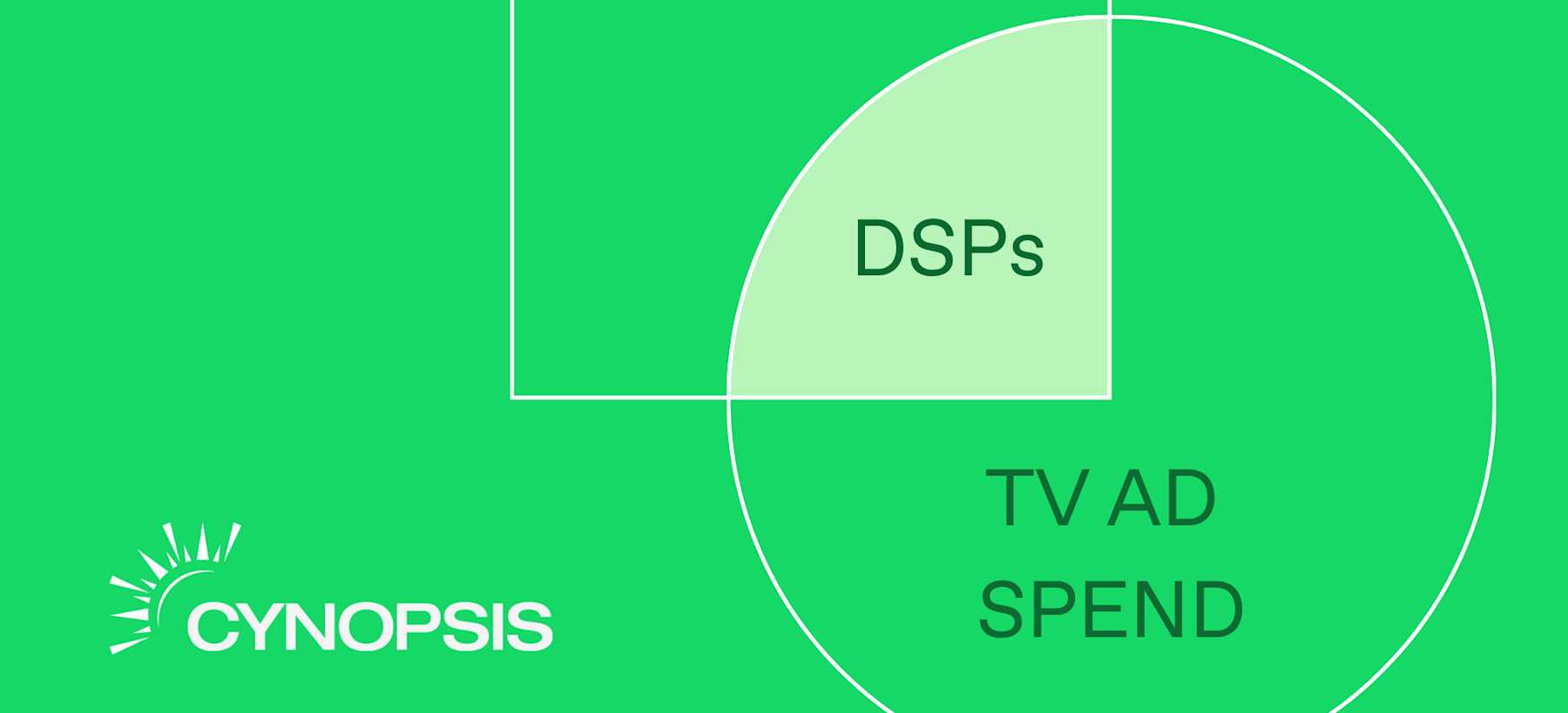
How Much of the TV Ad Market Can a DSP Actually Access?
A version of this article was originally featured in Cynopsis.
As CEO and Co-Founder of Tatari, I've spent the last decade building the infrastructure to help brands buy TV the right way; across linear and CTV, direct and programmatic. What I've seen from hundreds of millions of dollars in measured spend is that most advertisers have no idea how much of the market they're actually missing.
Most brands running TV advertising believe they have a TV strategy. What they actually have is a DSP strategy - and those are not the same thing. The US TV advertising market exceeds $90 billion, but demand-side platforms (DSPs) can only access roughly $17–18 billion of it. This article maps where the rest of the market lives, what programmatic actually reaches, and why the brands winning in TV are the ones who refused to let a DSP set their ceiling.
Key Takeaways:
US TV ad spend tops $90B; DSPs touch only ~$17–18B of it
National linear ($47B) and local linear ($21B+) are largely inaccessible via programmatic
Premium streaming inventory doesn't flow through programmatic pipes
Up to one-third of open RTB CTV inventory involves bot traffic or invalid impressions
The ad tech tax eats a significant share of every programmatic media dollar before it reaches real inventory
90% of CTV impressions come from just 10 publishers — meaning the intermediary layer adds cost, not reach
Brands winning in TV buy across the full market: upfronts, local, streaming, and programmatic where it actually works
The $90 Billion TV Market - And What Your DSP Can Actually Reach
If your paid social agency could only buy Instagram Reels, you wouldn't call that a social strategy. To properly maximize an ad channel, you would need access to all of it (e.g., TikTok, Facebook, Snap, etc), not just a portion. But that's what's happening in TV advertising. Most brands are buying a fraction of the market through tools that were never designed for the whole thing, and calling it a TV strategy. Let's break it down by following the actual ad spend:
US TV advertising ad spend exceeds $90 billion. The programmatic tier (the slice where DSPs operate) represents roughly $17-18 billion. Everything else is bought direct, negotiated upfront, or sold through relationships that have nothing to do with a bidstream.
Understanding what that means requires looking at each layer separately.
Inventory Type | Category | Est. Spend | DSP Access? | Notes |
National Linear | Upfront | $37B | ✗ No | Annual commitments negotiated directly between agencies and networks |
National Linear | Remnant/Scatter | $10B | ✗ No | Some scatter is accessible but pricing and availability vary |
Local Linear | — | $22B | ✗ No | Sold manually through regional networks, cable operators, broadcast affiliates |
Streaming | Traditional IO | $6.25B | ✗ No | Direct buy via manual insertion order — PDF, email, or XLS to the network |
Streaming | Programmatic Guaranteed (PG) | $4.5B | ✓ Yes | Premium inventory publishers set aside for buyers |
Streaming | Private Marketplace (PMP) | $3–4B | ✓ Yes | Higher-quality publishers; sold in curated auctions |
Streaming | Real-Time Bidding (RTB) | $9–10B | ✓ Yes | Open auction; lower-quality |
Linear TV is shrinking at 3–5% annually. Streaming is growing at ~15% annually.
These figures are drawn from Tatari's own analysis of publicly available industry data, including Nielsen, eMarketer, Media Dynamics, and MediaPost, 2025.
Why $47B in National Linear TV Is Inaccessible to DSPs
National linear alone accounts for roughly $47 billion, split between upfront commitments and scatter inventory. Upfront deals represent annual commitments negotiated directly between agencies and networks at pricing not available anywhere else. This market runs on relationships built over decades.
Local Linear TV: $22B in Inventory That Lives Outside Any Bidstream
Local linear is expected to hit $21 billion, driven in part by political ad spend. It is highly fragmented — regional networks, cable operators, and broadcast affiliates selling inventory manually, largely outside any automated system. For national brands with regional presence, this market is difficult but not impossible to access. For local advertisers, it remains one of the most important channels available.
Streaming TV Inventory: Why Premium Supply Never Enters Programmatic Pipes
Streaming is growing at roughly 15% annually and now accounts for 47% of all TV viewing in the US, according to Nielsen's latest Gauge™ report. This is where programmatic makes sense — and where most of the industry conversation has concentrated.
But streaming inventory is not a single market. The stack runs from traditional direct IOs at the top, through programmatic guaranteed and private marketplace deals, down to open RTB at the bottom. Premium direct inventory — the kind bought through upfront-style deals with major publishers — doesn't enter programmatic pipes. And roughly 20-25% of all ad-supported streaming inventory can only be purchased via linear.
Open RTB: The $9–10B CTV Tier DSPs Actually Access
The programmatic tier of the streaming market comprises programmatic guaranteed (PG), private marketplace (PMP), and open RTB, representing roughly $17-18 billion. This is the pocket DSPs operate in.
Limiting your TV strategy to this tier doesn't mean you're buying TV. It means you're buying a sliver of it — shrinking the opportunity from a $90 billion market to a $15 billion one — and the cleanest inventory in that sliver isn't guaranteed. By some estimates, as much as a third of open RTB CTV inventory involves bot traffic or invalid impressions.
Programmatic Is an Access Point, Not a True TV Strategy.
The brands consistently winning in TV don't limit themselves to what a DSP can reach. They buy in the upfronts when securing high-performing inventory makes sense; they understand the right mix of local when it matters; they run campaigns across linear and streaming together; and they use the power of programmatic for hyper-targeted audiences.
Getting there requires infrastructure built for the full TV ecosystem. Nearly 80% of advertiser spend on Tatari's platform is bought directly from publishers through Upstream, connecting advertisers to publishers at the ad server level — no DSP, no SSP, no unnecessary intermediaries. The remaining 20% is programmatic, where it genuinely works.
The brands winning in TV aren't anti-DSP. They're anti-ceiling. Programmatic is part of how they buy, not the limit of what they can buy.
If you're running TV through a DSP and wondering why reach feels limited, let’s talk!
Frequently Asked Questions
What is a DSP in TV advertising? A demand-side platform (DSP) is software that automates the purchase of digital advertising inventory through programmatic auctions. In the context of TV, DSPs primarily access streaming inventory sold through open RTB, private marketplaces (PMPs), and programmatic guaranteed deals — a subset of the overall TV market that represents roughly $17–18 billion of the $80+ billion US TV ad ecosystem.
How much of the TV advertising market can a DSP access? DSPs can access roughly $17–18 billion of the $80+ billion US TV advertising market — less than 25%. The rest is bought through direct insertion orders, upfront commitments, or relationship-based negotiations that don't touch a programmatic bidstream at all.
What is the ad tech tax in TV advertising? The ad tech tax refers to the cumulative fees extracted by intermediaries in the programmatic supply chain — DSPs, SSPs, resellers, and auction platforms — before a media dollar reaches actual publisher inventory. For TV, this is especially significant because the supply is concentrated among a small number of publishers, making the intermediary layer unnecessary in a way it isn't for the fragmented open web.
Can you buy linear TV programmatically? No — the vast majority of linear TV inventory, both national (roughly $47B) and local (roughly $22B), is sold outside of programmatic systems through upfront commitments, scatter buys, and direct relationships with networks and broadcast affiliates. Some addressable linear inventory is available programmatically, but it represents a small fraction of the overall linear market.
What is the difference between programmatic guaranteed, PMP, and open RTB for TV? Programmatic guaranteed (PG) involves a pre-negotiated deal where a publisher sets aside specific inventory for a buyer at an agreed price — offering predictability but less flexibility. Private marketplace (PMP) deals involve curated auction environments with higher-quality publishers. Open RTB is a real-time auction open to any buyer, typically with the lowest-quality inventory mix — and, by some estimates, as much as one-third of open RTB CTV inventory involves bot traffic or invalid impressions.
Why does premium streaming inventory bypass programmatic pipes? Premium streaming publishers — major networks and streaming platforms — typically sell their best inventory through direct insertion orders and upfront-style deals because it commands higher prices and allows them to control brand context. When that inventory is exhausted, lower-priority or remnant inventory may flow into programmatic auctions.
What does a full TV buying strategy look like? A comprehensive TV strategy includes: upfront commitments for high-priority linear and streaming inventory; direct insertion orders for premium streaming placements; local linear where reach matters at the regional level; and programmatic buying (PG, PMP, and selective open RTB) for audience-targeted campaigns. Roughly 80% of advertiser spend on Tatari's platform is executed via direct publisher connections; the remaining 20% uses programmatic where it genuinely adds value.
What percentage of CTV impressions come from the top publishers? According to internal Tatari platform data from hundreds of millions of dollars in measured spend, approximately 90% of CTV impressions originate from just 10 publishers. This concentration means the intermediary infrastructure that DSPs provide — designed to aggregate fragmented supply — adds cost rather than solving a real complexity problem in TV.

Philip Inghelbrecht
I'm CEO at Tatari. I love getting things done.
Related
Programmatic CTV Is a Starting Point for Full TV Strategy
Most brands think they're running a TV strategy using CTV alone. But if your TV strategy lives entirely inside a DSP, you're missing most of the market. Here's what a complete TV advertising approach actually looks like.
Read more

Watch: Why Premium CTV Inventory isn’t in Programmatic
Watch our recap from Marketecture Live featuring leaders from Tatari, NBCUniversal, and WBD discussing why much of premium CTV inventory never enters programmatic and what advertisers and media buyers can do to drive real reach and impact.
Read more
How Marketers Can Fully Embrace Convergent TV
Marketers who want to remain competitive need to reexamine the way they plan and measure performance across streaming and linear TV. Tatari's Head of Agency Partnerships breaks down how to dismantle traditional silos to create a unified, data-driven TV strategy that maximizes reach and ROI.
Read more