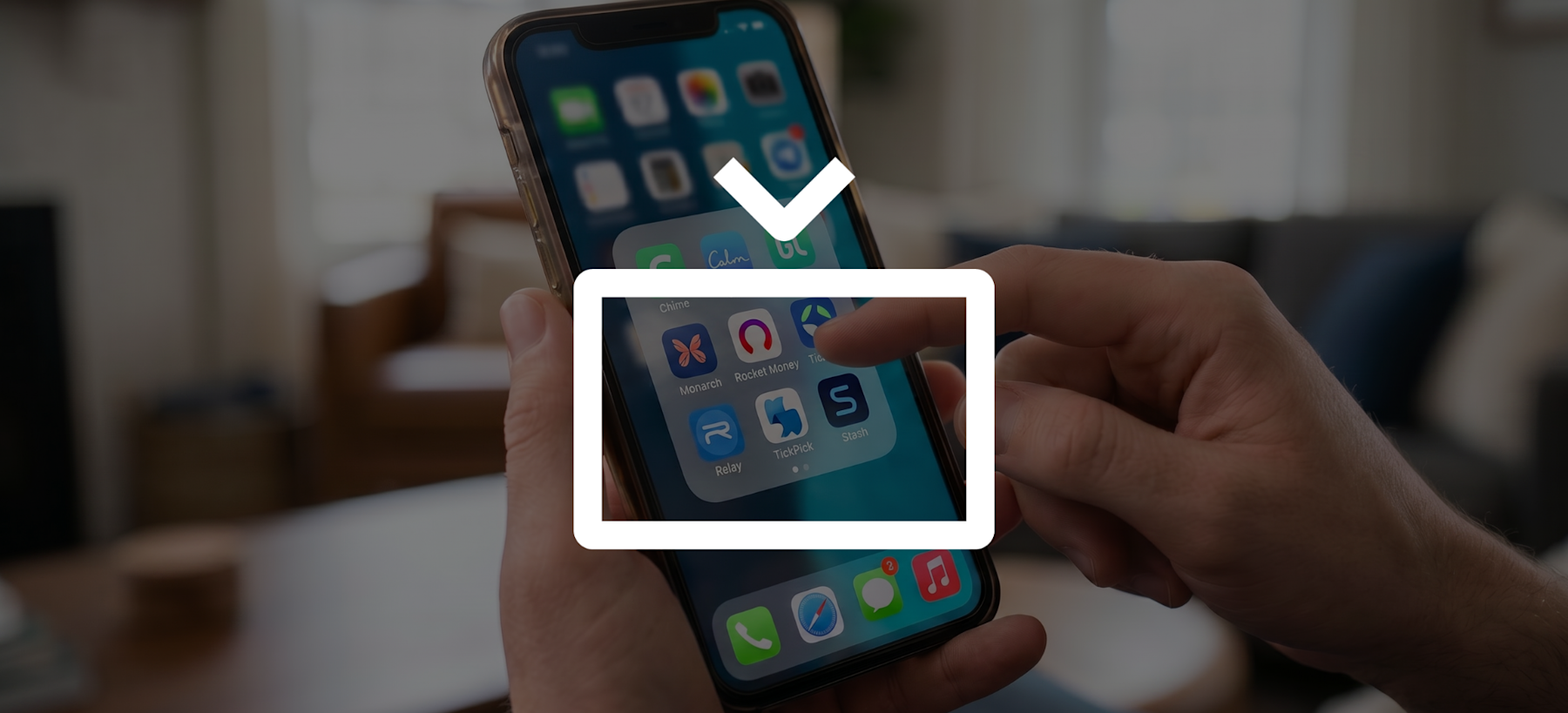
New Survey Reveals the Growth Channel Most Mobile App Marketers Are Overlooking
The mobile app market has a consolidation problem, and if you're an app marketer, it's working against you. Nearly 6 in 10 mobile shoppers have settled on just 2 to 5 apps for everything they do, according to a new report by eMarketer. Not 20. Not 10. Two to five. Consumers have made their choices, and the apps that didn't make that short list are effectively invisible.
That's the wall every mobile app marketer is trying to break through. Paid social and search can help drive installs, but they reach people who are already in-market, already scrolling, already in someone else's funnel. Breaking into a consumer's permanent app rotation requires something more; the kind of repeated, high-reach exposure that builds familiarity before someone ever opens the App Store.
That’s exactly what TV does. And it does something digital can’t. TV lets you tell a story and drive an action in the same breath. The best mobile app marketers aren’t choosing between brand and performance. They’re using TV to do both at once.
A growing number of mobile app marketers have figured this out. They're running TV like a performance channel: DR-focussed creative, rigorous measurement, and a clear understanding of how it's impacting their other marketing channels.
"TV has unlocked enormous growth for us,” said Vineet Mehra, CMO of Chime. “It contributes to building unaided brand awareness and has also served as a direct response engine."
Chime's experience isn't an outlier. To get a broader view of the landscape, we surveyed our mobile app marketing clients to find out how and why they're using TV. Here's what they told us.
Most App Marketers Aren't Running TV for Brand Awareness
According to Tatari's 2026 Mobile App Marketing Survey, 54% of respondents cited driving subscriptions and in-app purchases as their primary reason for advertising on TV. App installs came in second at 31%. Brand awareness — the channel's supposed core use case — finished last at 15%.
This isn't fringe behavior. It's the majority position.
When more than half of performance marketers are running TV primarily to drive revenue in favor of awareness it tells you something has shifted. TV is no longer a reach play. For these marketers, it's a direct response channel.
46% of App Marketers Run Both Linear and CTV
According to the same survey, 46% of respondents run both linear and streaming/CTV. CTV-only came in at 31%; linear-only at 23%.
The 'linear is dying' narrative hasn't reached the people buying it.
Linear and CTV serve different functions in a media plan. Linear delivers scale with audiences you can't reach efficiently anywhere else. CTV delivers precision with addressable targeting, frequency control, and clean measurement. Running only one means you're solving for only half the problem.
Format | Strength | Best Use |
Linear TV | Unmatched reach and scale | Brand building, broad audience acquisition |
CTV | Targeting precision, addressability | Performance campaigns, retargeting, measurement |
Linear + CTV together | Full-funnel coverage | Maximum efficiency across acquisition and retention |
Direct Response Creative Outperforms Soft Brand Spots
46% of mobile app marketers lead TV creative with a "Download now" CTA, according to our study. Another 23% use vanity URLs or QR codes. 23% test multiple creative formats. Zero respondents reported running soft brand spots without a direct action trigger.
TV creative for app marketers should look nothing like TV creative for a CPG brand.
The goal isn't to make someone feel something. It's to make them do something. A clear, direct CTA tied to a specific action like a download, subscribe, visit a URL, etc. is what converts TV reach into measurable outcomes.
75% Saw Lower CPAs and Branded Search Lift After Adding TV
This one was a bit of a surprise. 92% of respondents said they use incrementality or geo-based lift testing to measure TV performance. Attribution platforms came in at 62%, brand lift surveys at 46%, MMM at just 31%.
Attribution platforms are built for digital. They follow clicks. TV doesn't generate a click, it generates a behavior change.
To isolate TV's actual contribution, you need a different methodology: run TV in some markets, keep others dark, measure the difference in outcomes. That's geo-based incrementality, and the fact that 92% of these marketers are using it tells you everything about how seriously they're taking measurement. If you're measuring TV with last-click attribution, you're almost certainly undervaluing it.
How geo-based incrementality testing works for mobile app TV campaigns:
Define test and control markets based on demographic and behavioral similarity
Run TV only in test markets for a defined flight period
Hold control markets dark on TV — all other channels remain equal
Measure the difference in app installs, subscriptions, or revenue between test and control
Calculate incremental lift and cost-per-incremental-outcome
Use results to optimize market mix, spend levels, and creative
77% Said TV Met or Exceeded Expectations
77% of respondents said TV met or exceeded their expectations. "Somewhat exceeded" and "met expectations" each drew 38%. 23% said it fell short.
The 23% who fell short is worth understanding, not dismissing.
TV has a learning curve. The marketers seeing the best results are typically a few test cycles in; they've refined their creative, settled on their channel mix, and built the measurement infrastructure to know what's working. The gap between "TV worked" and "TV didn't work" is almost never about the channel itself. It's about whether the campaign was set up to succeed.
What Separates the 77% From the 23%
Mobile app marketers who are winning with TV aren't doing anything unusual. They're applying the same performance discipline they bring to every other channel: clear objectives, direct response creative, rigorous measurement, and a willingness to test and iterate.
The data from this survey points to one conclusion: TV works for mobile app marketers who treat it like a performance channel — because that's exactly what it is.
Want to unlock more insights from the mobile app marketers getting TV right? Download our guide.
Frequently Asked Questions
What is the goal of TV advertising for Mobile App Marketers?
TV advertising for mobile app marketers is the practice of running performance-driven campaigns across linear and streaming television to drive measurable outcomes — app installs, subscriptions, and in-app purchases — tracked through incrementality testing and geo-based lift methodology rather than traditional attribution.
What is the best way to measure TV advertising for mobile apps?
According to Tatari's 2026 Mobile App Marketing Survey, 92% of mobile app marketers use geo-based incrementality or lift testing to measure TV performance. This methodology isolates TV's contribution by running campaigns in test markets while holding control markets dark, then measuring the difference in app installs, subscriptions, or revenue.
Should mobile app marketers run linear TV or CTV?
Both. 46% of mobile app marketers surveyed by Tatari run both linear and streaming TV simultaneously. Linear delivers unmatched scale; CTV provides targeting precision and addressability. Running only one format means reaching roughly half the available audience.
Does TV advertising actually drive app installs?
Yes. According to Tatari's survey, 85% of mobile app marketers use TV primarily as a performance channel — 54% to drive subscriptions and in-app purchases, 31% to drive app installs. Only 15% cited brand awareness as their primary objective.
Does TV advertising improve digital marketing efficiency?
Yes. 75% of Tatari's mobile app marketing clients reported organic traffic and branded search lift after launching TV campaigns. 42% saw improved conversion rates on paid search and social. 42% reported lower CPAs across their digital channel mix.

Michael Goldberg
I lead content at Tatari. When I’m not writing, I’m reading, watching The Office (again), hopelessly rooting for the Mets and Jets, and blasting heavy metal.
Related

How to Build a World Class Marketing Team | Vineet Mehra
What does a high-performing marketing org actually look like in 2026—when AI, growth pressure, and brand all collide? Chime Chief Growth and Marketing Officer, Vineet Mehra, cuts through the noise with a sharp, experience-backed framework for building teams that scale efficiently and avoid the silos holding most marketers back.
Read more
TV Can No Longer Be Overlooked in Media Plans for 2026
TV budgets are rising in 2026—but not for the reasons you might expect. New advertiser data shows how TV is being redefined as a performance channel that strengthens search, social, and full-funnel results.
Read more
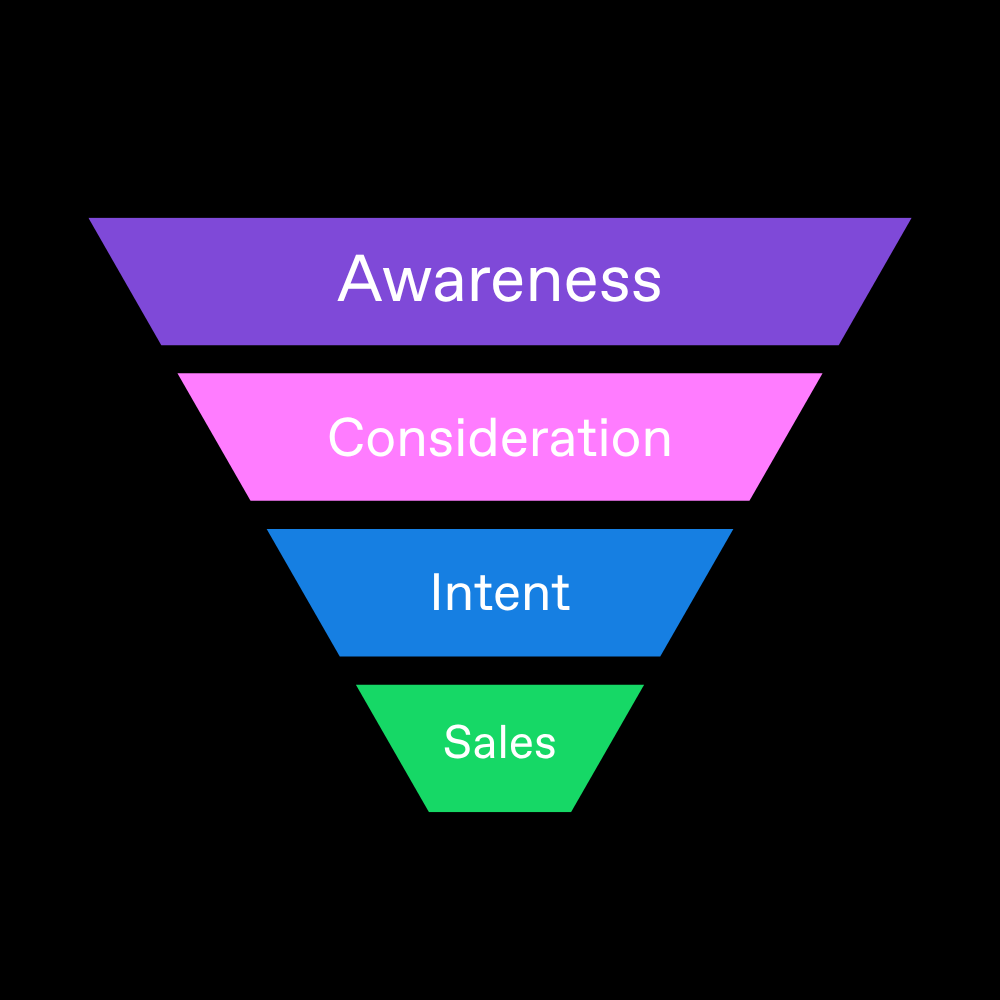
New Data Shows TV Outperforms Every Other Channel on Influence
A new study confirms what performance advertisers have long suspected: TV still dominates the purchase funnel, and if you've been shifting budget away from linear, the data might make you reconsider.
Read more