Tatari Turns 10: A Decade Leading TV's Reinvention
This year marks Tatari's tenth anniversary.
It's remarkable to think about. We started this company with a small, scrappy handful of engineers and data scientists in a cramped San Francisco office and one simple idea: TV should be measurable, accessible, and as easy to buy as digital. Ten years later we're more than 300 employees across the globe, still chasing that same idea, in an industry that looks a lot different than it did then.
Television didn't fade away over the last ten years. It fragmented. Those are different problems, and the industry spent most of the decade treating them as the same one. We never did. Here's what a decade did to viewership, streaming, sports, and the way TV gets bought.
TV Then & Now
Linear & Cable
2016 | 2026 | |
Most Watched Network | CBS (10.9M) avg. primetime viewers | NBC (6.1M) avg. primetime viewers (1st time #1 since 2002) |
Most Watched Program (Non-Sports) | The Big Bang Theory (CBS) | Tracker (CBS) |
Cable Subscribers | 93.6M | 62.2M |
Streaming
2016 | 2026 | |
Total Viewership | 164.5M (50.8% of US population) | 325M |
Number of Streaming Services | Nearly 100 | 300+ |
Streaming Ad Spend (US) | $9.1B | $37B |
Netflix Subscribers | 89.1M | 325M (as of last reporting) |
Netflix Advertising | No advertising | 250M ad-supported subscribers Approaching $3B in ad revenue |
YouTube Monthly Viewers | 1.5B | 2.7B |
NFL
2016 | 2026 | |
Average Viewership | 16.5M | 18.7M |
Platforms Carrying NFL Games | 6 | 9 |
Biggest Streaming Audience | 265K | 31.6M (Prime Video’s 2025 Wild Card Game) |
Super Bowl Viewership | 111.9M | 125.6M |
Cost of 30-second Super Bowl spot (avg.) | $5M | $8M |
Buying TV
2016 | 2026 | |
The Upfronts | $18.6B | $33.7B |
Programmatic | Roughly $710M | Roughly $17-18B |
These figures are drawn from Tatari's own analysis of publicly available industry data, including Nielsen, eMarketer, IAB, Media Dynamics, and MediaPost.
We Saw Where TV Was Headed and Built Before It Got There
The concept of convergent TV was no accident. We spent the past decade grounded in the reality that people watch in different ways because they follow the content they’re most interested in across linear, streaming, and digital video. From our perspective, these are one ecosystem, not three separate channel buys. The chart above says we were on the money. So we hired engineers and data scientists first because we wanted to build the infrastructure to execute and measure television the right way.
When we started out, TV often required a seven-figure commitment before a brand could even find out if it worked. We built Tatari so they could test it for a fraction of that and prove it before they scaled. We also pushed brands to run multiple creatives and let the data, not gut feeling, decide what stayed on air. That's table stakes now. It wasn't then. The rest of the industry has spent the years since copying the playbook.
We went direct to publishers instead of relying on programmatic because television was never meant to be built like digital. Almost 80% of our business still transacts this way today, with nothing sitting between Tatari and a publisher.
We led with incrementality-first measurement while the industry measured TV with digital view-through, or worse, audience panels. Many still do. We also purposely built attribution models designed for TV, not based on what works in digital. That work has resulted in 18 patented technologies.
We helped brands that were new to TV just a few years earlier secure a spot in the most-watched television event of the year, the Super Bowl. This year alone we had 4 brands in the big game. Then we measured it. Not just the ad, the total impact. The outcomes across every channel so those brands knew whether the biggest investment they’d ever made was worth making again. That's what convergent TV actually means in practice. TV doesn't perform in a silo. We built for that reality a decade ago, and it's the same reason more than 400 of the brands and agencies we work with will tell you we did it the right way.
The numbers tell the story better than I can:
Roughly $4 billion in managed spend
1.4 trillion linear impressions
54 billion streaming impressions
300 terabytes of response data
416 clients last year - a 1,564% increase since 2016
Our Data Drives Our Intelligence
Ten years of data is an asset that cannot be bought, only accumulated. Every plan we've built, every spot we've executed on behalf of our clients, every outcome we've measured is what our models learn from. It is the reason our AI is actually built on real data.
We've used machine learning to power TV measurement and performance since day one, so when the gen AI wave hit, we weren't scrambling to catch up. Today, our AI Planning Engine is executing a growing share of the TV campaigns we run, weighing all 45,000+ linear rotations and tens of thousands of streaming placements that no human team could ever manage. It's trained on 10 years of historical data.
We Put Our Customers First
I will spare you the Frank Sinatra impression, but we did it our way. No VCs. No parent company. Just ten years independently helping brands win on the channel many had written off. And we put our money where our mouth is along the way, making big bets and strategic acquisitions. While we’ve seen more TV platforms get absorbed into larger companies with shareholders and hard revenue targets across a dozen business lines, we continue to answer to our customers and our employees, not a boardroom. There’s nobody upstream of us with a margin to protect or a quarter to defend. When we tell a brand to wait out a last-minute discount on media instead of committing upfront, or go direct instead of programmatic, there is nothing behind that advice except their best interest. That’s what ten years of independence actually delivers.
Tatari Through the Years
Ten years reads better as a visual than a paragraph. Here's just a few highlights of an amazing decade.
A Clear Way Forward
A Clear Way Forward(™) isn’t just a tagline we plastered onto our rebrand in 2019. It was a promise, and it points in two directions.
For brands and agencies, it means the plan in front of you is the honest one. Where the budget should go and what it should return. Winning on TV is the only outcome we're accountable for. It's the same promise behind Forward, our annual forum on the future of TV advertising, which returns to New York this October.
For Tatarians, it's the same standard pointed inward: what makes us show up and perform our best to continue to grow.
To every client, partner, and Tatarian who got us here: thank you. The direction hasn't changed. We’re still looking forward.
Philip Inghelbrecht
I'm CEO at Tatari. I love getting things done.
Related
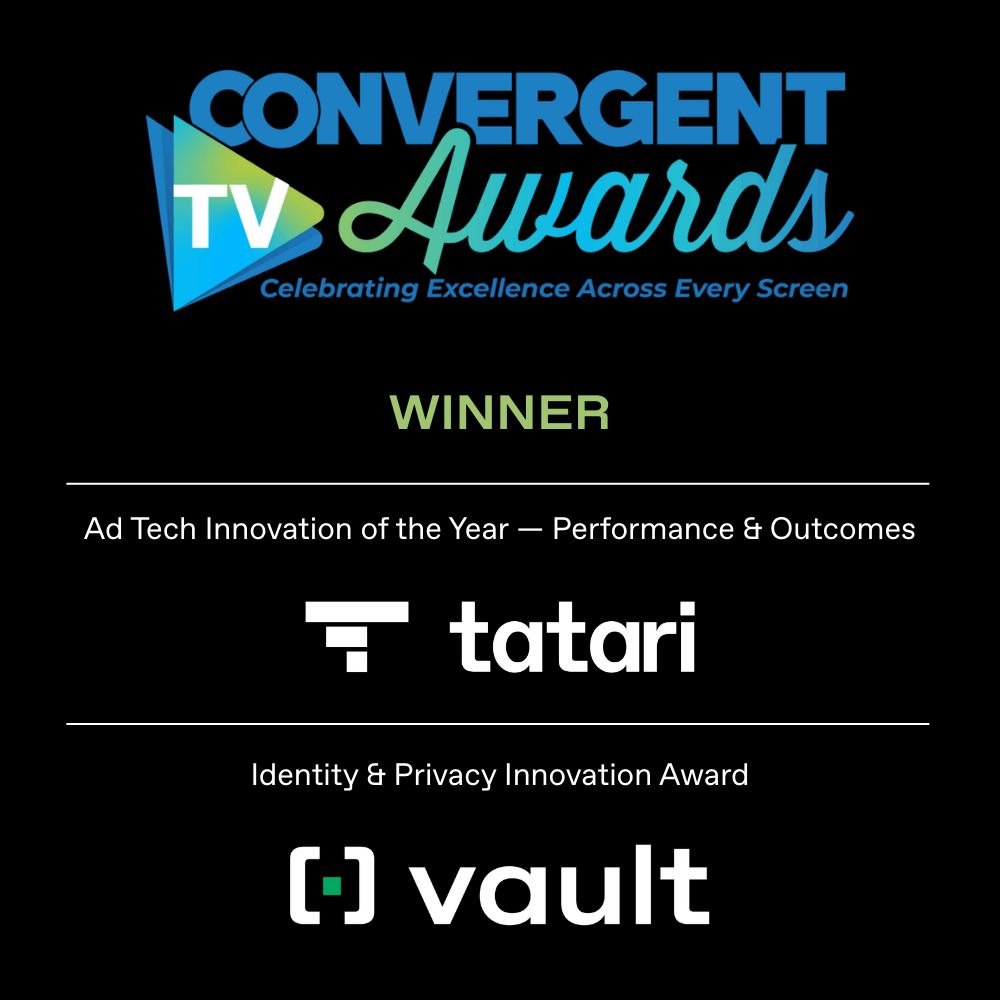
Tatari and Vault Win Convergent TV Awards for Innovation
Tatari and its sister company, Vault, have been recognized with two major honors at the 2026 Convergent TV Awards. Tatari was awarded with the Ad Tech Innovation of the Year honor, while Vault’s data clean room solution (DCR), garnered the Identity & Privacy Innovation Award.
Read more

The Tatari Boomerang Effect: Why Employees Return
Boomerang employees now make up over a third of new hires, and at Tatari, many choose to return. Hear directly from former Tatarians who came back for meaningful growth, a rewarding culture, and relationships that make it feel like home.
Read more
Why Buying Premium CTV Directly Just Got Better
Direct sales generate the majority of CTV revenue for publishers, but remain stuck in manual workflows—until now. Upstream automates the insertion order process through ad-server level integration, giving Tatari's 400+ brands direct access to premium inventory while eliminating intermediary fees and fraud risks that plague programmatic buying.
Read more