Watch: Winning When Buyers Never Click: How Quo and Otter.ai Use TV to Build Demand Before the Prompt
A year ago, about 1% of new Quo customers said they found the company through AI. Today it's 45%, the single most common answer in their onboarding survey. At Otter.ai, traffic from AI engines is growing roughly 20% month over month while organic search is down about 50% year over year.
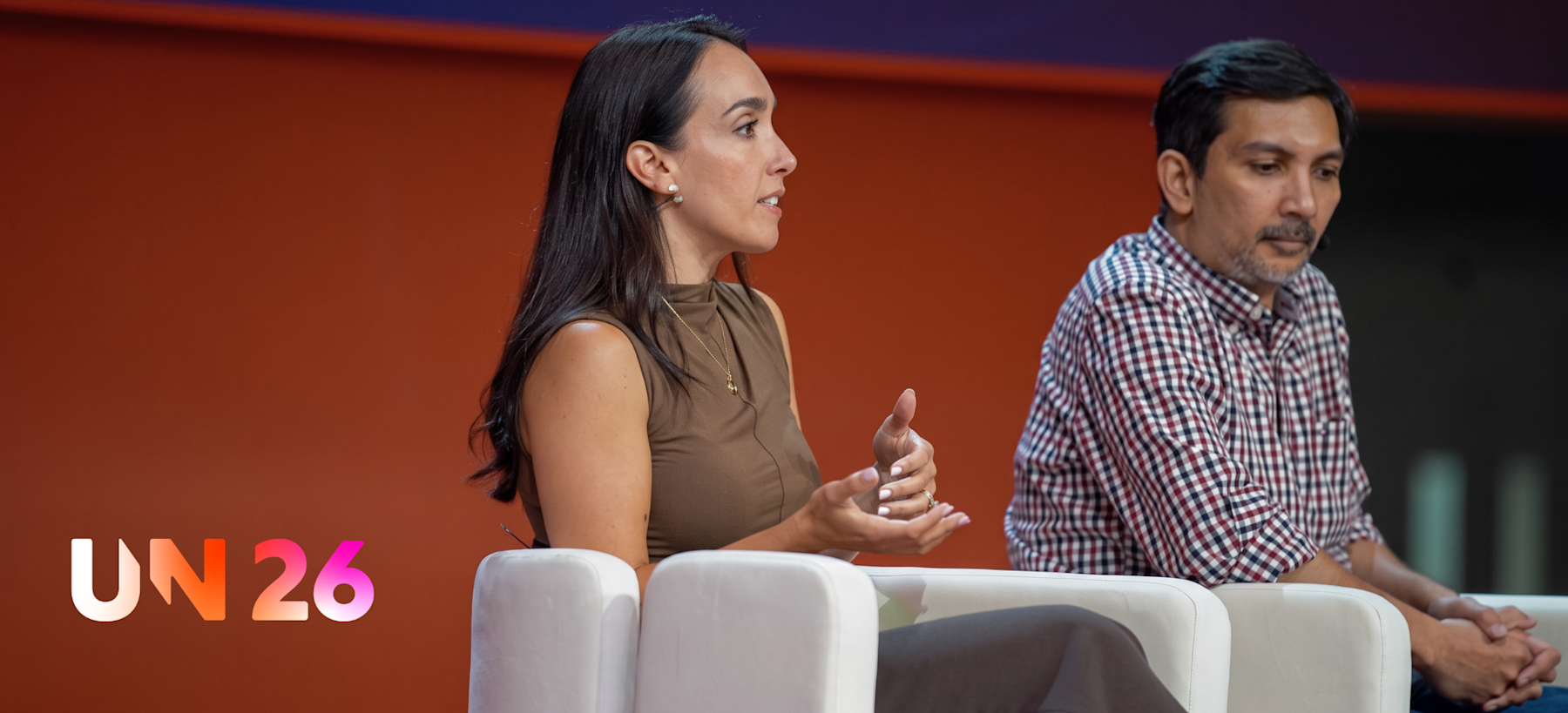
That's the backdrop for the conversation Tatari CRO Andy Schonfeld led at HubSpot UNBOUND in Boston earlier this month with Tori Murray, Head of Paid Growth at Quo, and Zaw Lin Hteik, Head of Growth Acquisition at Otter.ai. Both run performance teams at B2B software companies. Both have watched search grow less dependable as AI answer engines increasingly resolve the question before anyone reaches a website. And both have landed on the same conclusion: fighting harder for the clicks that remain is the wrong fight.
The session, Winning When Buyers Never Click, made a different case. As Andy put it: "How do you actually build demand before the search or the AI prompt ever happens?"
Watch the Full Session Below
Here are a few highlights.
AI is Already the Front Door
Neither brand is speculating about a shift. They're reading it in their own data.
"About a year ago, AI made up 1% of those responses," Tori said of Quo's “how did you hear about us” survey. "Now it's around 45%. It's the single most common answer."
Otter.ai is seeing the same pattern from the traffic side. Zaw noted that AI-referred visitors are converting into sign-ups and purchases at rates that hold up down the funnel, so the quality is there. What his team is still working out is exactly where all of that traffic originates.
Being Recommended Isn't the Same as Being Chosen
Both brands are putting budget into answer engine optimization. Neither thinks it's sufficient on its own.
"It's not just being eligible to be shown by the AI engine," Zaw said. "It's being recognized when it's shown." When a recommendation is a line of text and a brand name rather than a clickable result, the brand has to already mean something.
Tori pointed to Kevin Indig's user research on how buyers shop inside AI tools, which found two signals drive the decision: how the AI frames the brand, and whether the buyer recognizes it. About a quarter of the time, people skip the AI's recommended order and pick the brand they already know.
Andy framed the problem for the room: if every brand is running the same AEO playbook against the same three or four engines, what actually separates one from another? The answer is brand recall, and it shows up two ways. Brand search is the obvious one. The second is harder to measure but more powerful: you search a category, the brand surfaces, and you recognize it because you've seen it before. That recognition has to be built somewhere, and it's why TV plays a different role than any other channel in the mix.
Quo Rebuilt Its Brand on TV
Quo rebranded from OpenPhone a year ago, right as AI discovery was hitting the funnel. A rebrand means giving up brand recognition and brand demand with no guarantee of getting it back.
TV became the way to put the new name in market at scale. Quo now reaches more than 40 million viewers a month, and within about six months of the rebrand, demand for Quo had surpassed anything OpenPhone had reached.
What keeps them investing isn't the brand story. It's the numbers.
"We treat TV the same as we do any other performance channel," Tori said. "It's held to efficiency metrics that we've set for it. It needs to be incremental." A year in, Quo's customer acquisition cost from TV is half what it was at launch. "It really earns that dollar every month."
Why TV Survived Otter’s Budget Cuts
When marketing budgets get trimmed, the instinct is to keep whatever's easiest to measure, which usually means bottom-funnel search. Otter.ai cut a significant share of its marketing spend a little over a year ago and kept TV.
"The reality is that TV built this familiarity and then built more demand ahead of time," Zaw said. "If we cut the TV budget, we know we'll see the impact at the search and downloads funnel."
The proof is in a cross-market comparison. The US is the only market where Otter.ai runs TV, and it's normally the most expensive market to acquire in. Yet Otter's cost per acquisition on social channels is about 60% lower in the US than in its other markets. Zaw's team now evaluates TV holistically: the direct return on the spend, the lift it produces in every other channel, and the buyer confidence that comes from being on TV at all.
At Tatari, we call this the TV halo effect, and it's what hundreds of clients tell us with their own data every day.
The B2B Playbook: Measurement, Targeting, Creative, Optimization
Tori breaks Quo's TV program into four disciplines. Both panelists walked through how they run each one.
Measurement. Establish a baseline before the first spot airs. TV isn't a last-click channel, so you need models that can see it. Quo triangulates a marketing mix model with incrementality and geo tests, looking for signals that all point in the same direction. Otter.ai pairs a third-party measurement partner with its own internal data and runs holdout market tests. For both, confidence in measurement is the gate to scaling spend. This is why Tatari built geo testing, frequency control, survey attribution, and incrementality testing into the platform: TV has to be as accountable day to day as paid social or paid search.
Targeting. "You can treat it like a CRM at the end of the day, which I think might surprise a lot of people," Tori said. Quo uses interest and geo-based targeting in the Tatari platform, and is currently geofencing the placements from a new out-of-home campaign to retarget those audiences on TV. Otter.ai leans on contextual targeting through dayparting, networks, and programming. Early morning shows and Sunday evenings have been the strongest performers for reaching professionals, so much so that Otter built a campaign around that moment: "Regain Your Weekend," which opens on the Sunday-night dread of a meeting appearing on the calendar.
Creative. "It really doesn't need to be a Hollywood production," Tori said. Quo walked out of a two-day shoot with multiple concepts in 15- and 30-second cuts, then used Tatari to test which hooks worked. "As B2B marketers, you're probably sitting on way more content than you realize that you can use across TV." Case studies and testimonials shot for TV also end up on landing pages and the website. Otter.ai has gone the other direction with a high-production spot at roughly $150K in creative investment, and Zaw says it paid for itself within the year. His broader point: TV creative works at more than one level of investment, and you can start small.
Optimization. Both teams run the same structure: a core set of networks and programs that reliably deliver every month, with a testing layer on top. Otter.ai sets aside about 15% of budget for tests. When an MLB package in small markets kept working, they expanded it into a bigger program. Tori's advice is to keep diversifying into new programming, because the inventory is vast and the core will keep funding the experiments.
Be the Name in Their Head Before the Prompt
Asked for one piece of advice for marketers watching AI reshape discovery, both panelists gave the same answer from different angles.
"We need to think of the discovery process as a connected system," Zaw said. "It's not just about search anymore. It's about building brand recognition ahead of time, so when the recommendation comes from the AI engine, your brand is already recognized and chosen."
Tori challenged the room to look at their current portfolio and ask whether it's built for the moments that matter. "Rarely is the thing that's most easily measurable on a last click the thing that's the most impactful." TV, out-of-home, audio: channels that build a brand together, so that when a decision arrives, the buyer already knows who you are.
Andy closed it out: the brands that win from here are the ones that are already the name in someone's head before the prompt or the query ever happens.
Frequently Asked Questions
How is AI search changing how B2B buyers discover brands?
AI answer engines increasingly resolve a buyer's question before they visit a website, which reduces clicks and makes traditional search less dependable as a funnel entry point. Quo now sees AI as the single most common source in its customer onboarding survey (45%, up from 1% a year earlier), and Otter.ai reports roughly 20% month-over-month growth in AI-referred traffic alongside a 50% year-over-year decline in organic search.
Is answer engine optimization (AEO) enough to win in AI search?
AEO helps a brand become eligible to appear in AI-generated recommendations, but appearing isn't the same as being chosen. Research cited in the session found buyers skip the AI's recommended order about a quarter of the time to pick a brand they already recognize. Both Quo and Otter.ai invest in AEO alongside brand-building channels like TV so that when their name surfaces, buyers know it.
How do B2B brands measure TV advertising?
TV isn't a last-click channel, so both brands use multiple methods that should point in the same direction: marketing mix modeling, incrementality and geo-lift testing, holdout markets, and third-party measurement validated against internal data. Quo holds TV to the same efficiency metrics as its other performance channels and has seen its TV-driven customer acquisition cost fall by half over the first year.
What is the TV halo effect?
The TV halo effect is TV advertising's ability to improve performance in other channels beyond what those channels would produce alone. Otter.ai's cost per acquisition on social is about 60% lower in the US, the only market where it runs TV, than in its other markets, even though the US is typically the most expensive market to acquire in.

Amit Sharan
I run marketing at Tatari and have a gadget problem.
Related

Watch: How Jones Road Scaled TV to 25% of Its Media Mix
Hear how Jones Road broke through a paid social plateau with TV and what they learned along the way, including the real cost of free ad credits.
Read more
Social Media's Measurement Gap Is Hiding Where the Real Ad Value Lives
Social captures 27.7% of ad spend on just 12.5% of media time. That's a measurement gap, not a performance one, and Tatari is helping close it for TV.
Read more
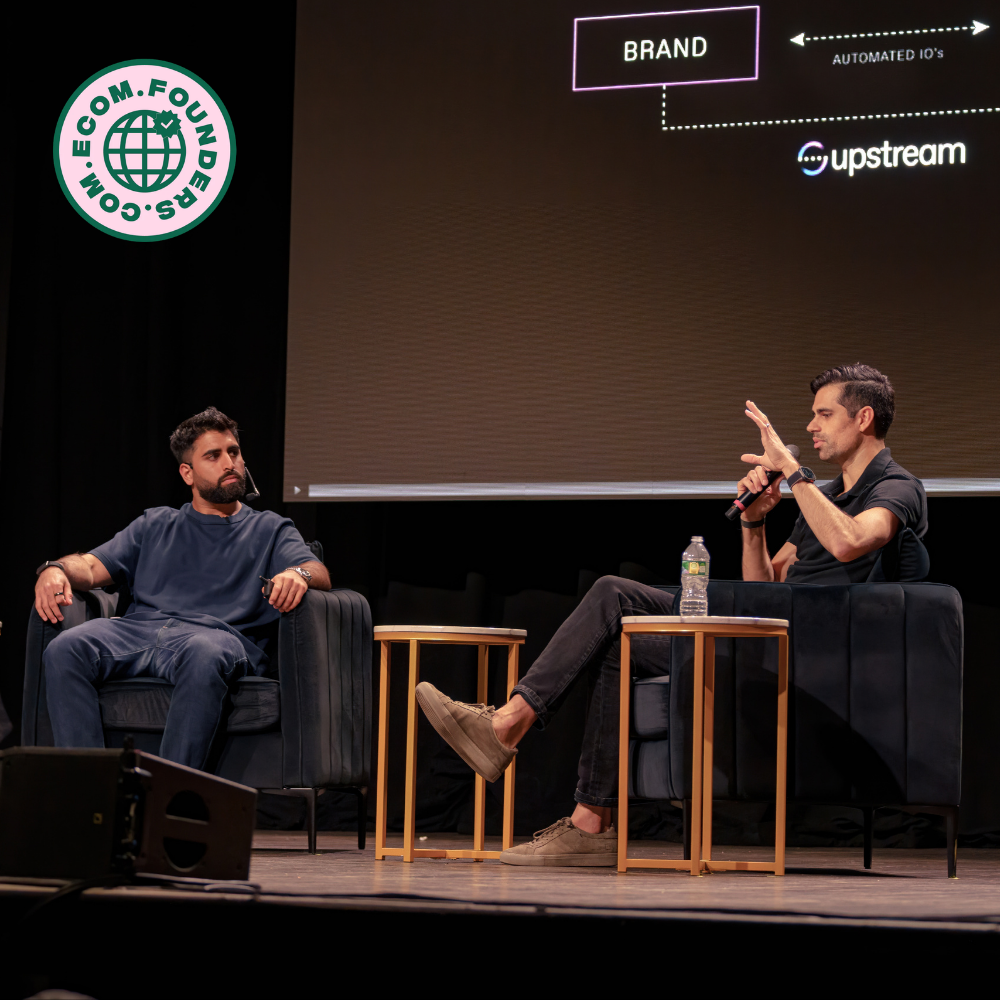
Watch: From Black Box to Built-In Skill: How AI Is Rewriting the Rules of TV Advertising
At the ecomFounders AI Summit, Tatari's Matt Giannetti sat down with Nik Sharma to discuss how AI is rewriting every phase of TV advertising, from planning to execution to creative. Watch the full session and check out some of the highlights.
Read more