Watch: From Black Box to Built-In Skill: How AI Is Rewriting the Rules of TV Advertising
At the 2026 AI Summit, the conversation was predictably dominated by AI. From AI for social to AI for email. But the session that cut through the noise took a different angle entirely.
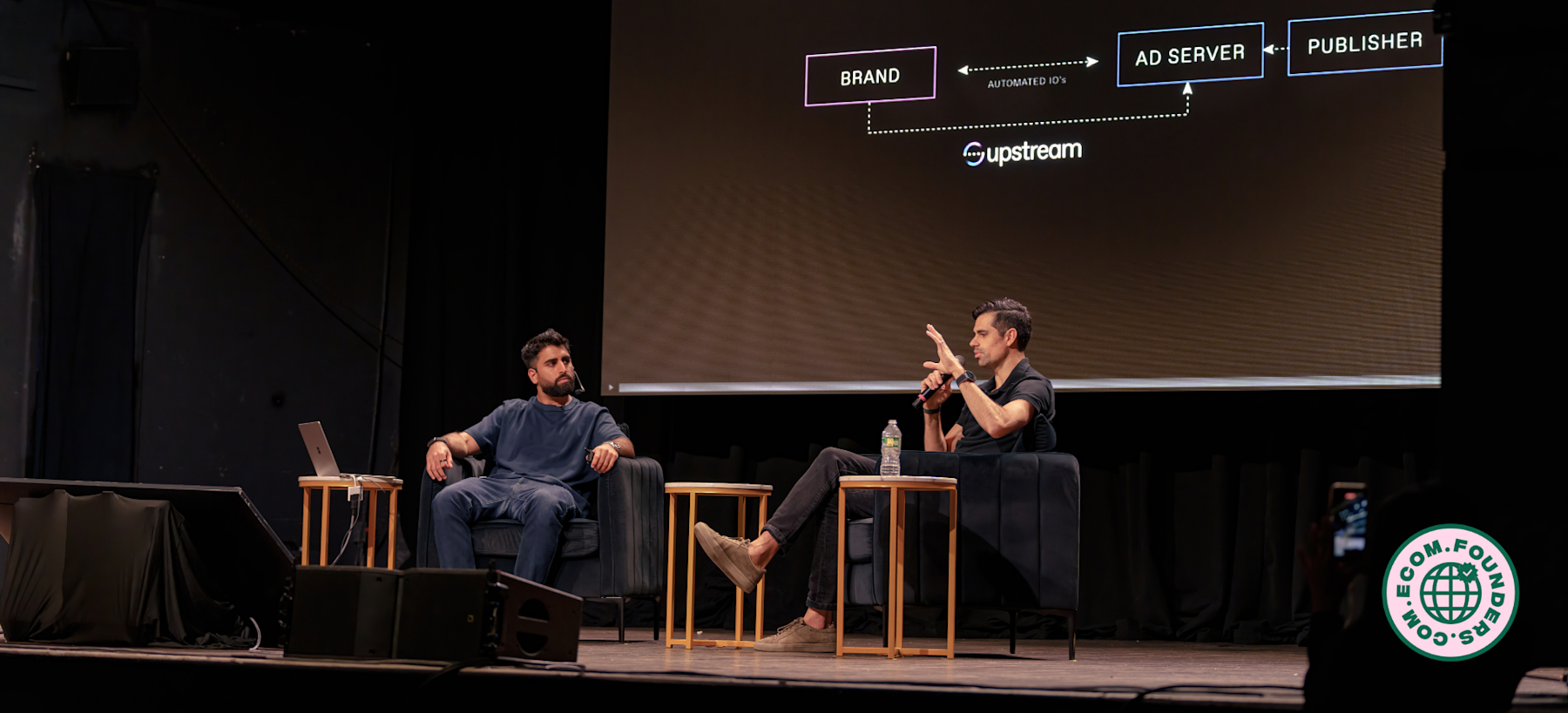
Nik Sharma sat down with Tatari's Head of Revenue, Matt Giannetti, to make the case that the channel most brands in the room had already written off - TV - is quietly where AI is having its biggest impact. The session, "From Black Box to Built-In Skill: How AI Is Rewriting the Rules of Performance Advertising," covered four phases of the TV advertising lifecycle: planning, execution, reporting, and creative. The argument threading through all of it: TV in 2026 is not what it was in 2016, and the brands who haven't revisited it recently are making decisions based on a problem that no longer exists.
Watch the full session below
Here are a few highlights.
The Data That Makes AI Different for TV
Matt opened with the premise that AI is only as good as what it's trained on, and that most of what the industry calls "AI" is being built on generic models with no domain-specific depth.
Tatari's position is different. The company has spent close to a decade building what it calls the most comprehensive performance TV dataset in existence: 300 terabytes of response data, 180 million conversion events processed daily, $9 billion in managed spend, 1.4 trillion linear impressions, and 23,000+ creative assets each tagged with approval records and actual performance scores. The AI knows not just where ads ran, but how each one performed.
"You can talk about AI all day long," Matt said. "But without unique, high-quality data, there is no AI."
He also drew a clear distinction between what he called "agentic AI" — essentially workflow automation with better marketing — and what Tatari has actually built: AI embedded in the product itself, driving campaign decisions in ways no human buyer could replicate at scale.
When 45,000 Options Are Too Many for a Human
The practical case for AI in TV planning comes down to a scale problem. Human buyers have to choose from more than 45,000 linear network-rotation entities, plus tens of thousands of streaming placements. No media planner can evaluate all of them simultaneously. Large language models (LLMs) can.
Tatari's AI Planning Engine analyzes audience data, historical performance, and current market conditions to recommend an optimal media mix — which networks, which dayparts, which budget allocations — before a brand spends a dollar.
The plan isn't static either. As real-world performance data comes in, the AI surfaces updated recommendations, effectively re-planning continuously based on what's actually working.
Beyond the DSP: How AI Changes Actual Execution
In TV, reach is what makes the channel worth buying. And this is where most programmatic and DSP-based approaches fall short. By cherry-picking impressions, they sacrifice the very thing that makes TV powerful.
Matt's argument here was direct: Tatari doesn't need a DSP. Because of its direct publisher relationships and the depth of its performance dataset, Tatari can make impression-level decisions without the intermediary layer.
The example he used made it concrete: imagine a fitness brand and a meal kit brand both eligible for the same impression on a Tuesday morning lifestyle network slot. Tatari's AI makes that decisioning call in real time, based on years of observed performance data. A traditional DSP buys the cheapest impression that matches a demographic filter. Tatari's AI identifies the impression most likely to drive a specific outcome for a specific brand.
Reporting Gets Conversational
TV measurement at Tatari has never relied on GRPs or estimated reach. Every spot is tied to real business outcomes: website visits, sign-ups, app installs, conversions. That part is solved.
The next step is making that data as accessible as a conversation. A natural language interface for TV analytics where a marketer can ask "which spots drove the most efficient customer acquisition last month?" and get an answer in seconds.
But Matt pointed to a second, equally significant dimension: explainability. Not just reporting what happened, but being able to ask the AI planning engine why it made a particular recommendation. In plain English. That kind of transparency, he argued, is what allows marketers to actually trust AI-driven decisions rather than treat them as another black box.
An Honest Take on AI Creative
Creative was the question everyone in the room had been waiting for. Nik framed it plainly: most DTC brands don't have a TV commercial. Isn't that still the barrier?
Matt's answer was more nuanced than the hype allows. The honest reality: AI creative tools are powerful but not plug-and-play. They require stitching together multiple tools — storyboarding, voiceover, animation, editing — with significant human direction. Tatari's own research found that 86% of brands say they will not use AI for 100% of their TV creative. And consumer research shows that 30% of viewers across every age group say AI-generated ads make them less likely to choose a brand. Authenticity still matters.
What brands can do today is repurpose what they already have. Tools like SpaceBack can convert high-performing social content into a 4K CTV-ready spot in minutes. BAERSkin went from 8-second AI clips in late 2025 to full 30-second spots by early 2026, using VEO 3, ElevenLabs, and AI-assisted scripting. Levels Protein used AI to execute a creative vision that traditional production budgets couldn't support.
Tatari itself uses AI in the creative process in two specific ways: accelerating network approval workflows, and predicting creative performance before a spot airs, scoring assets against historical data to identify which ones are most likely to drive outcomes.
Watch the full session to learn how AI is changing the face of TV advertising.

Hooman Javidan Nejad
I’m Senior Director of Marketing at Tatari and I’ve mastered the art of baking artisan sourdough bread.
Related
Exploring the Future of TV Buying at Cannes
Speaking at this year’s Cannes Lions, Tatari took the stage to show that performance TV can be both measurable and creative—all while leveraging AI to plan smarter and drive stronger results.
Read more
Breaking Down The Truth About Agentic AI In Ad Tech in 2026
Every ad tech platform is touting "agentic AI." Most of it is just automation with a fancy name. Tatari’s CEO, Philip Inghelbrecht, breaks down what real AI actually requires and what every advertiser should be asking before they buy into the hype.
Read more
How an AI Hackathon Turned Ideas Into Real Product Features
Most hackathons end with a demo and an idea that sits in a spreadsheet. Ours ended with new product features built to help TV advertisers. Here's how 16 teams and 50 ideas made it from concept to launch.
Read more