How to Advertise on the Super Bowl (And Win)
6 TV Campaigns That Drove Real Results — And What Every Brand Can Learn From Them
Super Bowl advertising is the practice of purchasing commercial time during the NFL championship game broadcast to reach a national television audience of more than 100 million viewers - 125.6M in 2026. It is one of the largest and most expensive media placements available to brands in the United States, with 30-second spots on the national linear broadcast averaging $7M–$8M as of 2026. Super Bowl ads are distinctive because viewers actively anticipate and engage with them, generating earned media, social conversation, and measurable downstream impact that extends well beyond the broadcast itself.
Advertising during the Super Bowl requires early planning, strong creative alignment, and coordination across media buying, legal review, and NFL or network standards. Brands must secure inventory months in advance, develop high-quality creative, and prepare supporting campaigns that run before, during, and after the game. With modern measurement tools, advertisers can track site visits, conversions, incremental lift, and cross-channel engagement tied directly to their Super Bowl exposure. This guide breaks down the full process, from buying a Super Bowl commercial to building a strategy that maximizes reach and performance long after the final play of the game.
Key Takeaways:
Super Bowl advertising delivers unmatched national reach, cultural relevance, and measurable performance impact, which is why brands continue to prioritize it as a tentpole moment.
Successful campaigns begin months in advance and combine the in‑game commercial with pre‑release teasers, social amplification, streaming extensions, and post‑game measurement.
Understanding how to advertise on the Super Bowl requires clarity on costs, creative expectations, approval timelines, and the role of cross‑channel strategy.
The rise of streaming has opened the door for advertisers who never thought securing a Super Bowl ad was an option.
Modern measurement tools, including those from Tatari, allow brands to track site visits, conversions, incremental lift, and cross‑platform engagement tied directly to their Super Bowl exposure.
How to Advertise on the Super Bowl
Companies advertise on the Super Bowl by purchasing commercial slots from the official broadcast network for that year, typically through a media buying agency or working with a TV advertising platform that can offer direct network relationships to help manage negotiations, pricing, and placement. Once the slot is secured, brands develop a high‑impact commercial, complete legal and network approvals, and build a cross‑channel campaign that runs before, during, and after the game. Successful Super Bowl Advertising blends national TV exposure with digital amplification, social promotion, streaming extensions, and real‑time engagement to maximize reach and performance.
Quick Summary of the Process
Secure inventory through a media agency or TV advertising platform
Develop and produce the commercial
Complete legal, creative, and NFL or network approvals
Launch supporting digital and social campaigns
Measure performance using modern TV and cross‑channel analytics
Why Brands Advertise on the Super Bowl
Super Bowl Advertising remains one of the few media moments where brands can reach a national audience that is fully tuned in and emotionally invested. Viewers expect the ads, talk about them, and often watch them again after the game. This creates a level of attention that standard campaigns rarely achieve.
The value extends beyond the broadcast. Super Bowl placements generate a wave of earned media, social conversation, and next‑day coverage that amplifies the initial investment. Tatari’s in-depth reporting shows that modern viewing behavior strengthens this effect. Streaming, alternative feeds, and cross‑channel extensions allow brands to reach incremental audiences who are not watching the linear broadcast. This combination of cultural scale and measurable performance is why the Super Bowl continues to be a priority for brands launching new products, entering competitive categories, or reinforcing their position in the market.
Massive Audience Reach
The Super Bowl delivers one of the largest live audiences in television, giving brands a rare opportunity to reach more than 100 million viewers at the same time. Few media moments offer this level of scale or attention, which is why Super Bowl Advertising continues to be a priority for brands with national ambitions. Viewers stay tuned in from kickoff to the final play, and commercial breaks become part of the entertainment rather than a distraction. This concentrated reach allows brands to introduce new products, reinforce their identity, or spark conversation with a single creative moment.
Tatari’s analysis of recent Super Bowl seasons shows that this reach extends beyond the linear broadcast. Streaming and alternative feeds continue to grow, creating additional opportunities for brands to connect with incremental audiences who may not be watching traditional TV. This shift strengthens the value of a Super Bowl marketing strategy by combining cultural scale with measurable performance across platforms.
Cultural Impact and Media Attention
Super Bowl commercials often become cultural moments in their own right. Viewers anticipate the ads, and the most memorable spots dominate social platforms, news cycles, and next‑day recaps. This cultural momentum gives brands an opportunity to shape the conversation long after the game ends.
Tatari’s reporting reinforces how modern distribution amplifies this effect. When brands pair an in‑game spot with digital extensions, social activation, and streaming placements, the cultural ripple becomes even stronger. The result is a compounding cycle of visibility that elevates the campaign beyond the 30‑second placement.
Brand Awareness and Visibility
A Super Bowl commercial can significantly increase brand recognition, even among viewers who do not take immediate action. The scale of exposure creates a lasting impression that supports long‑term marketing goals, especially for brands entering competitive categories or launching new products. Because the Super Bowl reaches a broad national audience in a single moment, it accelerates awareness at a pace few other media channels can match.
Tatari’s analysis of convergent TV shows how brands can extend this visibility across CTV, digital video, and targeted media. This allows advertisers to reinforce their message beyond the in‑game spot and maintain visibility across platforms where audiences continue to engage.
Earned Media and PR Amplification
Super Bowl commercials often function as major public relations events in addition to paid media placements. News outlets, marketing publications, and social platforms analyze the ads, highlight creative trends, and spotlight standout campaigns. This earned media can significantly expand the reach of a Super Bowl commercial without additional spend, multiplying the value of the initial investment. Viewers search for the ad, share it across platforms, and engage with related content long after the broadcast. This creates a compounding cycle of visibility that elevates the campaign beyond the initial placement.
How Much Does It Cost to Advertise on the Super Bowl
Advertising on the Super Bowl requires one of the largest investments in modern media. The total cost includes the price of the 30‑second broadcast slot and the production budget needed to create a commercial that can stand out on one of the biggest stages in television. Recent Super Bowl placements have ranged from seven to eight million dollars for a single 30‑second spot, with premium positions costing more. Brands also invest in teasers, social extensions, influencer partnerships, and paid digital support to extend the reach of the in‑game placement.
Cost Component | Typical Range | Notes |
30‑second national broadcast slot | $7M to $8M | Higher for premium moments or early sellouts |
Production budget | $500K to $5M+ | Depends on talent, effects, creative ambition |
Digital and social amplification | $100K to $1M+ | Teasers, influencers, paid social, PR |
Streaming and CTV extensions | Flexible | Can supplement or replace linear |
Post‑game retargeting | $50K to $250K+ | Converts Super Bowl exposure into performance |
Tatari’s reporting on Super Bowl strategy highlights how this investment has evolved. In their analysis of how brands can reach Super Bowl audiences without spending millions, Tatari explains how advertisers can use streaming, CTV, and targeted digital video to participate in the moment at a fraction of the cost. This shift gives brands more flexibility in how they approach the Super Bowl, whether they choose a national broadcast placement or a cross‑channel strategy that aligns with their budget.
Tatari’s guidance for brands evaluating Super Bowl Advertising emphasizes that the media buy is only one part of the investment. Their analysis of how to reach Super Bowl audiences without spending millions highlights how advertisers can use streaming and targeted digital video to complement or even replace the national broadcast slot. This gives brands more flexibility in how they approach the Super Bowl and how they allocate their budgets.
Commercial Production Costs
The cost of producing a Super Bowl commercial often rivals the price of the media buy itself. High‑impact creative requires strong storytelling, premium production quality, and talent that can carry the message at a national scale. Many brands invest in cinematic visuals, large‑scale sets, celebrity appearances, or advanced visual effects to ensure their spot stands out in one of the most competitive advertising environments of the year. Production budgets can range from hundreds of thousands to several million dollars depending on the concept, talent, and timeline.
Additional Marketing Campaign Costs
The investment in Super Bowl Advertising extends well beyond the in‑game commercial. Brands typically support their spot with a multi‑week campaign that includes teaser videos, paid social amplification, influencer partnerships, digital video extensions, and PR outreach. These elements help build anticipation before the game and sustain momentum after the broadcast. Depending on the scope, these supporting efforts can add hundreds of thousands of dollars to the overall budget.
Tatari highlights how these extensions can be optimized. Their analysis shows that targeted CTV, digital video, and social campaigns allow brands to reinforce their message efficiently and reach incremental audiences who may not be watching the linear broadcast. This approach helps advertisers maximize the value of their creative while maintaining control over total campaign spend.
How to Advertise on the Super Bowl - Step by Step
Advertising on the Super Bowl is a long, structured process that starts months before the game. Brands that succeed treat it as a full multi-phase campaign, not a single placement.
Secure inventory through a media buying agency or TV advertising platform 6–12 months before the game
Develop and produce high-quality creative that meets NFL and network standards
Complete legal, creative, and NFL/network approvals (allow 2–4 months)
Launch supporting teasers, social campaigns, and digital extensions 1–2 months out
Set up real-time tracking and measurement before game week
Monitor performance on game day across linear and streaming
Run retargeting and cross-channel analysis in the 1–2 weeks after the game
Winning Super Bowl Strategies: TV Campaigns that Worked
Super Bowl advertising is often described as a cultural moment, but Tatari’s clients prove it can also be a performance engine. These brands didn’t just generate buzz. They generated measurable, immediate business outcomes. The following case studies highlight how different advertisers used Tatari’s modern TV buying and measurement to turn a single Super Bowl placement into a surge of high‑intent traffic, search demand, and downstream conversions.
Each example below uses verified results from Tatari’s analysis of Super Bowl performance.
MANSCAPED: Capturing Peak Attention Before Kickoff
MANSCAPED chose a strategic pre‑kickoff placement, airing just before the National Anthem: a window with massive viewership and minimal ad clutter. The result was one of the strongest immediate responses of any Tatari client.
Performance within 5 minutes of airing:
52X increase in website visitors
One of the largest traffic surges of the entire Super Bowl window
Ranked among the top‑rated ads of the night
This placement demonstrated how early‑game inventory can outperform expectations when paired with a brand that knows how to capitalize on attention.
Life360: Proving That Streaming‑Only Super Bowl Buys Can Drive Massive Response
Life360 took a different approach: a streaming‑only Super Bowl strategy. Their spot aired at the end of the second quarter, right before halftime, a moment when streaming viewership spikes as audiences shift devices.
The results were immediate and dramatic.
Performance within 5 minutes of airing:
1,000% surge in website traffic (11X)
Strong engagement from modern, connected households
Clear proof that streaming‑only Super Bowl placements can deliver high‑intent response at scale
Life360’s outcome challenges the assumption that only linear placements drive impact. Streaming alone can deliver a Super Bowl‑level moment.
Tecovas: Outperforming Major Sporting Events With a Streaming‑Only Strategy
Tecovas also ran a streaming‑only Super Bowl placement and, in the process, delivered one of the most impressive spikes Tatari has ever recorded.
Performance within 5 minutes of airing:
6,400% increase in website visitors (65X)
3X larger surge than their World Series campaign (which ran across both linear and streaming)
Demonstrated that a streaming‑only Super Bowl strategy can outperform major linear sporting events
Tecovas proved that premium creative, paired with modern distribution, can deliver explosive results without a traditional broadcast slot.
Ro: Generating One of the Strongest Traffic Spikes in Company History
Ro ran a combined linear + streaming strategy in the first quarter, and the impact was immediate and sustained.
Performance highlights:
One of the highest traffic spikes Ro has ever recorded
Sustained lift for hours after the game
Outperformed:
NFL Championship
NFL Post‑Season
MLB World Series
Search interest spiked sharply (Google Trends)
Earlier than competitors
More pronounced
More concentrated
Search and site traffic aligned, confirming incremental consumer intent
Ro’s campaign shows how a Super Bowl moment can reshape demand curves across both search and direct traffic.
TickPick: Winning Big With a Streaming‑Only Super Bowl LIX Strategy
TickPick made its Super Bowl debut during Super Bowl LIX in 2025 with a streaming‑only strategy that capitalized on historically-low streaming CPMs and record-breaking digital viewership.
Leveraging existing “hero” creative, TickPick secured national streaming placements on Tubi and NFL digital properties at a fraction of linear costs (75-80% less) while still reaching millions of sports fans. The brand extended the value of its Super Bowl buy with premium placements in the World Series, creating a multi‑moment performance engine. Early results showed strong lower‑funnel lift, including app installs and registrations, proving that streaming‑exclusive Super Bowl buys can deliver meaningful business outcomes.
The results validated the strategy: TickPick saw strong lower‑funnel performance, including app installs and registrations, and confirmed that streaming‑exclusive Super Bowl buys can deliver meaningful business outcomes.
Performance highlights:
First‑ever Super Bowl ad (Super Bowl LIX)
Streaming CPMs 75–80% lower than linear
Reached millions of incremental viewers via Tubi + NFL digital
Strong lift in app installs and registrations
Follow‑through placements secured in the 2025 World Series
Efficient spend allocation across linear + streaming remnant inventory
TickPick’s debut proves that streaming‑only Super Bowl placements can deliver both massive reach and measurable lower‑funnel impact, all without the cost of a traditional linear buy.
Fiverr: Turning a Super Bowl Moment Into Lower Acquisition Costs
Fiverr used its Super Bowl ad placement as the foundation of a full‑funnel performance strategy, pairing a culturally relevant in‑game spot with Tatari’s predictive intelligence and pixel‑based measurement.
The brand’s goal was not just awareness. It was efficient customer acquisition at scale. Tatari optimized the placement using machine learning, then retargeted viewers across linear and streaming in the days following the game. This approach converted Super Bowl attention into measurable downstream action.
Performance highlights:
75% lower acquisition costs compared to Fiverr’s traditional TV campaigns
Immediate surge in website traffic following the Super Bowl LV spot
Long‑term traffic normalized at levels significantly higher than pre‑Super Bowl benchmarks
This campaign proved that when paired with intelligent retargeting, a Super Bowl moment can drive both cultural impact and sustained performance lift.
In summary, here’s a recap of the actual metrics Tatari clients experienced from their Super Bowl campaigns and other NFL-adjacent programming:
Brand | Placement Type | Timing | Traffic Lift | Notable Outcome |
Linear + Streaming | Pre‑kickoff, Super Bowl LX | 52X | One of the top‑rated ads of the night | |
Streaming only | End of Q2, Super Bowl LX | 11X | High‑intent response from connected households | |
Streaming only | End of Q2, Super Bowl LX | 65X | Outperformed their World Series campaign by 3X | |
Linear + Streaming | Q1, Super Bowl LX | Highest spike in company history | Sustained lift for hours after the game | |
Streaming only | Super Bowl LIX (2025) | Strong lift in app installs + registrations | 75–80% lower CPMs; extended value via World Series placements | |
Linear + Streaming + Retargeting | Super Bowl LV | 75% lower acquisition costs vs traditional TV | Massive immediate traffic surge; long-term traffic normalized above pre‑Super Bowl levels |
What These Results Prove
Across six very different brands and industries for various products and services, the pattern is both unmistakable and undeniable:
Super Bowl advertising drives immediate, measurable action
Streaming placements can outperform expectations
Pre‑kickoff and early‑game slots can deliver massive surges
Search and site traffic move together when the message resonates
Modern TV measurement reveals the true impact of the moment
Most importantly, these results show that the Super Bowl is no longer just a brand play. With the right strategy and the right measurement partner, it becomes a performance channel.
Tatari Differentiators
The Super Bowl is one of the most competitive advertising environments in the world. Every brand is fighting for attention, and every agency claims to offer something unique. What separates Tatari is not access to inventory or creative services. It is the ability to turn a cultural moment into measurable business impact. The differentiators below reflect what Tatari clients consistently experience across major tentpole events, including the Super Bowl.
1. Transparent, Real-Time Measurement
Tatari gives brands a clear view of what happens in the minutes and hours after their ad airs. This includes site traffic, search interest, incremental lift, and cross-channel impact. Instead of relying on broad estimates, advertisers see exactly how their audience responds and how that response compares to other major events.
2. Modern TV Buying Across Linear and Streaming
Tatari treats linear and streaming as a unified system rather than separate channels. This allows brands to reach viewers wherever they are watching and to optimize placements based on real performance data. The case studies show that streaming alone can outperform major linear events, and Tatari is one of the few partners with the scale and data to prove it.
3. Incrementality and Cross-Channel Lift
Tatari measures how TV exposure influences other channels such as search, social, and direct traffic. More than half of Tatari clients see conversion rates improve by 50% or more when TV is active. This is especially important during the Super Bowl, when viewers often turn to their phones immediately after seeing an ad.
4. Intelligent Budget Allocation
Super Bowl campaigns often require advertisers to match spend across a broader network portfolio. Tatari uses historical performance data to guide how those dollars are allocated. This ensures that every part of the campaign, not just the in-game spot, contributes to measurable outcomes.
5. Retargeting That Extends the Moment
Tatari helps brands re-engage viewers who saw the Super Bowl ad through targeted digital and streaming placements. This turns a single high-impact moment into a multi-week performance engine. Brands like Fiverr have used this approach to convert Super Bowl awareness into sustained acquisition.
6. A Platform Built for Both Brand and Performance
Most Super Bowl partners focus on brand lift. Tatari focuses on brand and performance together. The platform is built to support advertisers who want cultural relevance and measurable results. The case studies demonstrate that both are possible when the right data and distribution strategy are in place.
Preparing for Advertising in the 2027 Super Bowl (Super Bowl LXI)
Super Bowl LXI will be one of the most strategically complex and creatively rich Super Bowls in recent years, driven by a unique combination of timing, distribution, and Disney’s aggressive yearlong promotional strategy. The game will take place at SoFi Stadium in Inglewood, California, on Feb. 14, 2027 which will be the first Super Bowl ever held on Valentine’s Day. This unusual date gives brands a rare cultural overlap to play with, similar to Jeep’s highly regarded 2020 Groundhog Day activation, which the article references as a precedent for holiday‑themed creative opportunities.
The 2027 game will also be the latest Super Bowl date in history, giving agencies more production time than ever before. And because the day after the game is Presidents’ Day, many viewers may be off work and unplugged, which could influence how brands plan post‑game extensions and next‑day performance expectations.
Disney’s Multi‑Platform Strategy for 2027
Disney holds the broadcast rights and will simulcast the game on ABC and ESPN, marking the first time ESPN has ever aired a Super Bowl. This alone expands the game’s footprint, but Disney is going significantly further.
The company has launched a “Year of the Super Bowl” initiative, described internally as “one of the most ambitious cross‑company initiatives in ESPN and Disney history”, designed to keep the Super Bowl top‑of‑mind all year long. This includes:
A symbolic handoff video connecting Super Bowl LX to LXI
A second video, “We’re Going,” reimagining the classic “I’m Going to Disney World” tradition with characters from Toy Story, Star Wars, and Moana
Weekly ESPN content such as I Scored a Touchdown
A new video podcast, The Biggest Game, hosted by Jeremy Schaap
Custom content and integration opportunities for advertisers across Disney platforms
Disney is clearly positioning the 2027 Super Bowl as a yearlong cultural event, not just a single broadcast.
Expanded Game‑Day Distribution and Alt‑Casts
Disney is expected to bring its signature multi‑broadcast approach to the Super Bowl, similar to what it has done with the College Football Playoff. The concept of alt‑casts effectively segments the Super Bowl audience by interest and tone, giving brands more nuanced environments to match their creative. Among the on-deck programming anticipated for Super Bowl LXI:
A ManningCast with Peyton and Eli Manning is planned for ESPN2
Disney may produce an animated alt‑cast, similar to its “Funday Football” broadcasts featuring Monsters, Inc. characters, which previously aired across ESPN2, Disney+, Disney Channel, Disney XD, and the ESPN App
ESPN may bring its Field Pass with The Pat McAfee Show to the Super Bowl, replicating its College Football Playoff coverage
This creates a multi‑layered viewing ecosystem that gives advertisers more ways to reach different audience segments.
As of now, the game will stream on the ESPN App and NFL+, with no confirmed plans for Disney+ distribution.
Advertising Inventory and Pricing Outlook
Ad prices for the 2026 Super Bowl averaged about $8 million for 30 seconds. Tatari predicts a 10% to 15% increase for next year’s pricing (a forecast made before 2026’s Super Bowl LX aired).
Viewership for the most recent Super Bowl was 125.6 million, slightly down from the previous year’s 127.7 million, but still the second‑most‑watched Super Bowl in history.
"We expect 2027 Super Bowl viewership to remain stable in the 125–127 million range," says Vicky Chang, VP of Media Investment at Tatari. "Ad prices are likely to increase 10–15% from 2026 levels, driven by strong demand, Disney's expanded distribution, and earlier inventory sellouts."
This stability, combined with Disney’s expanded distribution, suggests strong demand and early sellouts of 2027 Super Bowl ad inventory.
Advertisers Who Benefit Most From Super Bowl LXI
Advertiser Type | Why They Benefit | Supporting Detail |
National Brands | Broadest reach across ABC + ESPN | First‑ever ESPN simulcast |
Cross‑Platform Marketers | Yearlong content ecosystem | Disney’s “Year of the Super Bowl” initiative |
Culturally Driven Brands | Valentine’s Day creative opportunities | First Super Bowl ever on Feb. 14 |
Performance‑Driven Brands | More measurable digital touchpoints | ESPN App + NFL+ streaming confirmed |
Early Planners | Higher demand and earlier sell‑through | Disney preparing plans much earlier than past alt‑casts |
Conclusion
The Super Bowl remains one of the most powerful advertising moments in modern media. Its scale, cultural impact, and ability to generate national conversation make it a unique opportunity for brands that want to reach a broad audience. Success, however, requires more than a memorable commercial. It depends on early planning, strong ad creative, a coordinated media strategy, and a clear framework for measuring results.
The aforementioned case studies of Tatari customers demonstrate that performance is not limited to linear placements or traditional brand campaigns. Streaming-only strategies can outperform major sporting events. Early-game placements can deliver massive surges in traffic. Cross-channel lift can reshape demand curves for hours after the broadcast. With the right partner, the Super Bowl becomes a performance channel that accelerates awareness, engagement, and acquisition.
As brands look ahead to Super Bowl LXI, the opportunity is clear. The advertisers who prepare early, define their goals, and build a cross-channel plan will be best positioned to turn the moment into momentum. Tatari’s platform, measurement capabilities, and client results show what is possible when modern TV is used to its full potential.
Brands that approach the Super Bowl as a full campaign rather than a single placement are the ones that benefit most. They build momentum before the game, extend their message across channels, and use transparent measurement to understand how viewers respond. Tatari helps advertisers navigate this process by providing the data, insights, and support needed to make informed decisions at every stage. With clear visibility into performance and the ability to measure outcomes across the full funnel, brands can treat the Super Bowl not just as a cultural milestone but as a meaningful driver of business growth.
For advertisers considering the Super Bowl, the key is alignment. When the moment fits the brand’s goals, audience, and resources, it can deliver lasting impact. With the right strategy and the right measurement partner, the Super Bowl becomes more than a high‑profile media buy. It becomes a catalyst for long‑term success.
Ready to Discuss Your Company’s Super Bowl Advertising Plans?
If you’re considering advertising during Super Bowl LXI, now is the time to start planning. Tatari helps brands evaluate whether the Super Bowl is the right fit, structure a cross‑channel strategy, and measure the full impact of their investment with transparent, outcome‑based reporting.
Schedule a demo with Tatari to start planning your 2027 Super Bowl strategy.
FAQ
How much does a Super Bowl commercial cost?
A 30‑second Super Bowl commercial typically costs between $7M and $8M (per Tatari’s analysis of Super Bowl LX ad sales) depending on demand, placement, and timing within the broadcast. Premium positions such as early‑game slots or moments following major plays often command higher rates.
How far in advance do brands need to plan for the Super Bowl?
Most advertisers begin planning 6-12 months before the game. Inventory sells out early, and creative development, approvals, and cross‑channel planning require significant lead time.
Do Super Bowl ads actually drive measurable results?
Yes. Tatari’s analysis shows that Super Bowl placements can generate immediate and significant spikes in website traffic, search interest, and downstream conversions. Some clients saw traffic increase by more than 50X within minutes of airing.
Is it possible to advertise during the Super Bowl without buying a national broadcast spot?
Yes. Brands can use streaming placements, targeted digital video, and cross‑channel extensions to reach Super Bowl audiences without purchasing a national linear slot. Many advertisers use this approach to achieve strong performance at a lower cost.
What makes a Super Bowl campaign successful?
Successful campaigns have a clear objective, strong creative, and a full plan that extends beyond the in‑game placement. Teasers, social amplification, streaming extensions, and real‑time measurement help brands maximize the value of the moment.
How do brands measure the impact of a Super Bowl ad?
Brands use real‑time analytics, incremental lift modeling, and cross‑channel attribution to understand how viewers respond. Tatari provides minute‑by‑minute visibility into traffic, search behavior, and performance across linear and streaming.
Can smaller brands afford to advertise during the Super Bowl?
Yes. While national broadcast spots are expensive, many smaller brands use streaming‑only placements or targeted digital extensions to participate in the Super Bowl conversation at a more accessible cost.
What is the best time to air a Super Bowl commercial?
The best time depends on the brand’s goals. Early‑game placements often deliver strong attention with less clutter. Halftime and late‑game placements reach peak audiences but face more competition. Streaming placements offer flexibility across the entire event.
How long should a Super Bowl commercial be?
Most advertisers choose 30‑second spots because they balance cost and storytelling. Some brands use 60‑second or 90‑second formats when the creative requires more narrative depth.
How can brands extend the impact of their Super Bowl ad after the game?
Brands use retargeting, social content, digital video, and follow‑up campaigns to stay visible while interest is still high. The hours after the game often deliver strong performance when supported by cross‑channel reinforcement.

Harrison Hess
I'm Head of Sports Media Investment at Tatari. I help brands navigate sports' most impactful moments.
Related
4 Tatari Clients Reveal The Immediate Impact of Super Bowl Ads
The Super Bowl isn’t just for legacy brands anymore. Here’s how Manscaped, Life360, Tecovas, and Ro used streaming, linear TV, and Tatari to turn the biggest ad stage into a performance win.
Read more
2026 Super Bowl Ads That Drove the Most Engagement
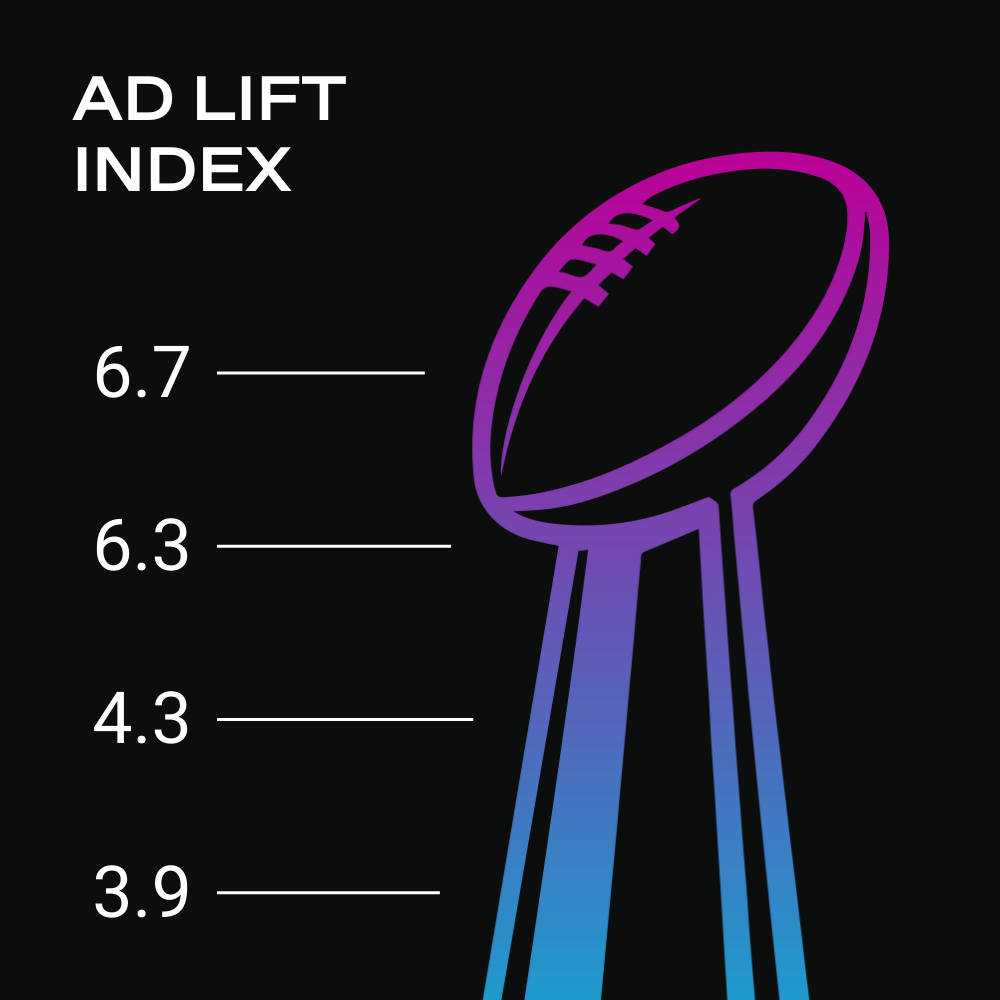
The Super Bowl delivers unmatched scale, but not every ad scores. We’re cutting through the noise and ranking the ads using objective performance signals, measuring incremental search lift to see which brands made an impact. The result is a data-driven scorecard of the game’s biggest ad winners.
Read more

How Streaming Is Democratizing the Biggest Ad Stage in America
Streaming and precision targeting are making the Super Bowl accessible to brands of all sizes—reshaping a massive broadcast into a flexible, multi-screen opportunity.
Read more