Why TV Syndication Is the Best-Kept Secret in Modern Advertising
The licensing of television content to multiple local stations and networks, simultaneously reaching millions of loyal daily viewers.
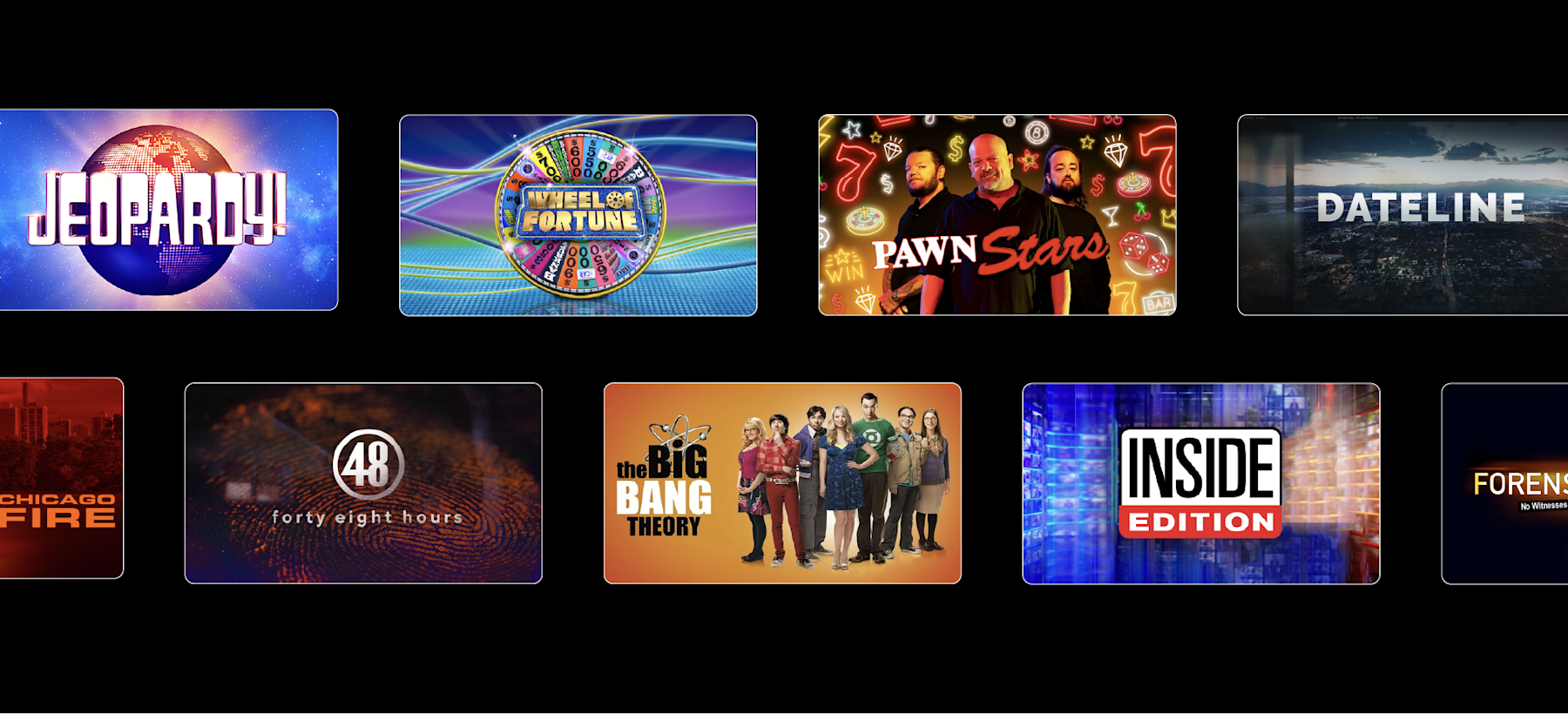
If you answered with "What is TV Syndication?" - congratulations. Most TV advertisers can't answer that clue, which is ironic, because the show giving a clue like that is a perfect example of the definition of TV syndication. Jeopardy! has aired on local broadcast affiliates across the country for over 40 years, not in primetime, not on a single network, but syndicated. And it still pulls in millions of viewers every day. So does Wheel of Fortune. So do Judge Judy, Pawn Stars, and every rerun of Seinfeld and The Office you've ever caught at 6pm. These aren't fading relics. They're media juggernauts, and they represent one of the most overlooked advertising opportunities on television: syndication.
The numbers back this up. Jeopardy! averages 8.9 million viewers and often ranks number one in national syndication. Wheel of Fortune, newly hosted by Ryan Seacrest following Pat Sajak’s legendary 41-year run, drew 7.99 million viewers in its debut month; its biggest premiere audience in three years. Not surprisingly, both shows were renewed through the 2027–2028 season.
That’s not a dying medium. That’s a thriving one that most advertisers are inexplicably ignoring.
What is (Actually) TV Syndication?
Syndicated television programs are shows sold station-by-station, market-by-market and licensed to local affiliates regionally or nationally. Instead of a show airing on one network in one time slot, a syndicated show can air on hundreds of local broadcast affiliates across the country at the same time, often at staggered hours. There are different categories of syndication:
First-Run Syndication
First-run syndication refers to shows produced specifically for the syndication market — never aired on a traditional network first. These programs are sold directly to local stations, giving them national reach without a network middleman. Think talk shows, entertainment programs, and game shows: Kelly Clarkson, Drew Barrymore, Entertainment Tonight, Inside Edition.
Advertiser-Supported/Barter Syndication
In barter syndication, the syndicator doesn't sell the show to a station — they give it away for free in exchange for a portion of the commercial inventory. That ad time is then packaged across all carrying stations and sold to national advertisers, while stations sell the remaining slots locally. It's a win-win: stations get free programming, national advertisers get network-style reach. Wheel of Fortune and Jeopardy! are the textbook examples.
Off-Network/Rerun Syndication
Off-network syndication is what most people picture when they hear the word: reruns of established network shows, sold to individual stations after their original run. For local stations, it's low-risk, high-value programming reaching familiar audiences; loyalty is built in, and older shows consistently attract new viewers. Seinfeld, Everybody Loves Raymond, Big Bang Theory, etc.
Why It’s Time to Rethink Syndication Inventory
For decades, syndication has been treated like a second-tier buy. The logic went something like this: “It sounds old. It airs on local stations. The shows are reruns. Our brand deserves better.” What’s more, TV advertisers have historically thought of TV in two generic ways:
Primetime broadcast: Great for brand awareness. Brutal on budget. CPMs north of $43. You’re paying for prestige.
Remnant/direct response (DR): Cheap CPMs. But the environments are often thought of as less premium or exclusive.
Limiting TV to that way of thinking has cost brands millions of dollars. Syndication actually blows up this false dichotomy entirely. And it’s been right in front of us the whole time.
Millions of engaged, habitual viewers per week
Broadcast-quality, brand-safe environments
CPMs that look far more like DR than primetime
Measurable, attributable performance
Tatari’s Syndication Performance Breakdown
When we analyzed the syndication programs our clients ran throughout the last few years, the results were striking. Below, a performance score of 1.0 = DR-level efficiency. Anything above 0.7 is considered solid. Anything above 1.0 means the placement is delivering better than direct response — with broadcast-quality brand exposure on top.
Performance score: above 0.7 = solid; 1.0 = DR-level efficiency (DR=1). Data: 2024 to present, ranked by spend descending.
Pawn Stars scored a 1.73? Yes, the show about guys in Las Vegas buying your grandmother’s lamp for $40 and then reselling it for $400 outperformed the DR threshold by 73%. Inside Edition beat it by 26%. Forensic Files by 31%.
These aren’t flukes. They reflect something important about syndication audiences: they are habitual, attentive, and highly responsive. The person watching Forensic Files at 10pm on a Tuesday is not simultaneously doom-scrolling TikTok, checking Slack, or ordering DoorDash. They are watching the screen. And when they see your ad? They respond.
Compare that to the average digital impression, which has a viewability rate hovering around 50% and an attention span measured in milliseconds. Syndication viewers are actually there.
Who Should Be Running on Syndication Right Now?
Short answer: everyone who isn’t. Syndication is especially powerful for:
DTC brands that want TV’s brand-building power without burning their performance budget on $43 CPMs
Growth-stage companies testing linear TV for the first time — syndication’s lower minimums make it accessible without betting the whole media budget
Established advertisers looking to extend reach beyond core primetime buys without torching their blended CPM average
Any brand with adults 25–54 in their target — which is, honestly, most brands
Ready to add syndication to your media mix? Let’s talk!

Katie Miltimore
I lead media partnerships at Tatari, and reality TV is my guilty pleasure.
Related
New Data Shows TV Outperforms Every Other Channel on Influence
A new study confirms what performance advertisers have long suspected: TV still dominates the purchase funnel, and if you've been shifting budget away from linear, the data might make you reconsider.
Read more

How Advertisers Use AI to Create TV Spots
Brands are quietly using AI to produce TV commercials in days, not months, and the results might surprise you. We talked to the marketers behind it to find out what's working, what isn't, and what it means for the future of advertising.
Read more

How to Build a World Class Marketing Team | Vineet Mehra
What does a high-performing marketing org actually look like in 2026—when AI, growth pressure, and brand all collide? Chime Chief Growth and Marketing Officer, Vineet Mehra, cuts through the noise with a sharp, experience-backed framework for building teams that scale efficiently and avoid the silos holding most marketers back.
Read more